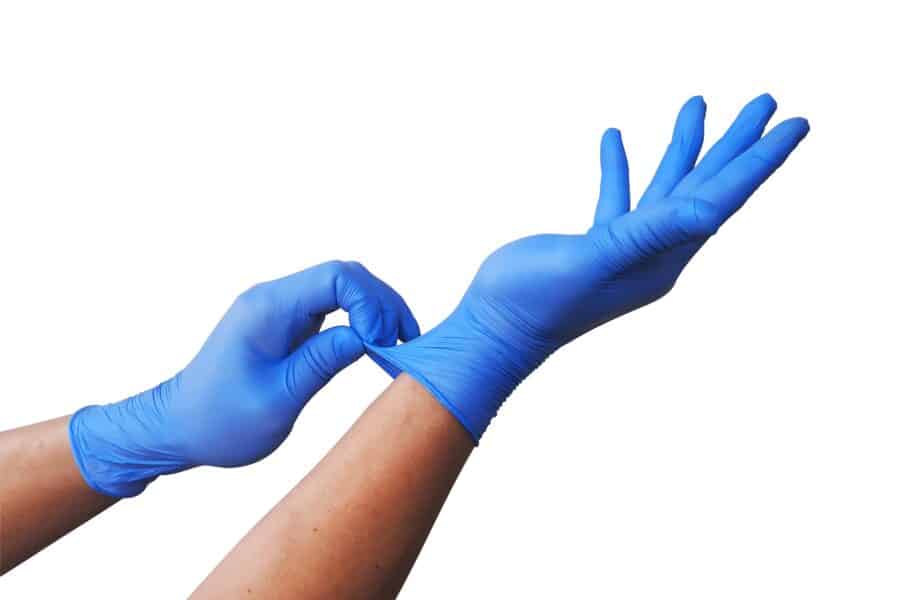


Choosing the Right Disposable Gloves
Making informed decisions about disposable gloves in care homes always comes down to matching the level of risk involved in the task to the most suitable product.
Because disposable gloves are used across cleaning, infection control, laundry handling, food preparation, and personal care tasks, selecting the correct glove type plays an important role in maintaining hygiene standards within care homes. Different materials provide different levels of chemical resistance, durability, and contamination protection, so staff need clear guidance on which gloves are appropriate for each environment.
If you want help choosing between nitrile, vinyl, latex, or synthetic options for your team, we can talk you through it.
Disposable Gloves for Care Homes: PPE, Infection Control & Safe Selection
Types of Gloves Used in Healthcare
Nurses, carers, and other healthcare staff typically use examination gloves. When deciding between latex, vinyl, and nitrile, the key factor is the level of risk involved in the task. Gloves are required where there is a risk of cross-infection between residents and staff, but the choice of glove should still be guided by a proper risk assessment.
High-Risk vs. Low-Risk Situations
Latex and nitrile gloves are commonly used in higher-risk situations involving blood, bodily fluids, or residents with infectious disease concerns. Vinyl gloves may still be suitable for lower-risk general procedures, but they are not appropriate where stronger barrier protection is needed.
Because latex allergies are now more widely recognised, many healthcare and care environments operate as latex-free settings. In these cases, homes often choose nitrile or other synthetic alternatives that still offer high levels of protection.
What Are Acceptable Quality Levels (AQL), and Why Do They Matter?
AQL refers to the acceptable quality level, which is a way of measuring how many defects are permissible within a batch of gloves. In practical terms, a lower AQL means fewer defects and a lower chance of pinholes or weaknesses.
For medical examination gloves, European standards generally require an AQL of 1.5. That means the gloves must meet a higher inspection standard than lower-grade products. Better protection usually comes at a higher cost, but it also reduces the likelihood of failure during use.
Further PPE and glove guidance for healthcare environments is also available from the UK Health and Safety Executive.
Sterile vs. Non-Sterile Gloves
When to Use Sterile Gloves
Sterile gloves are primarily used for surgical or aseptic procedures. They must meet stricter manufacturing and quality requirements, which is why they are more expensive than non-sterile options.
Sterile nitrile examination gloves are designed for medical procedures where a sterile field must be maintained. They are latex-free and compliant with the relevant medical device and PPE standards.
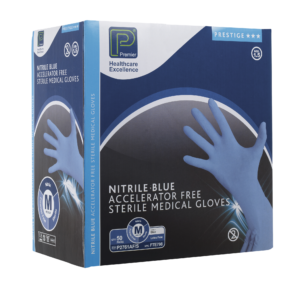
Able’s nitrile sterile medical gloves are a popular choice among our clients.
When to Choose Sterile
Examples of procedures that require a sterile field and higher-barrier protection include:
- Lumbar punctures
- Liver biopsies
- Clinical care to surgical wounds or drain sites
- Procedures for neutropenic patients
- Insertion of urinary catheters
- Vaginal examination in obstetrics
When Non-Sterile Gloves Are Appropriate
For most non-surgical care tasks, non-sterile gloves are appropriate. These gloves are widely used for routine clinical work where sterility is not required but protection still matters.
Many care providers choose non-sterile nitrile gloves because they offer strong barrier performance without the added cost of sterile packaging and testing.
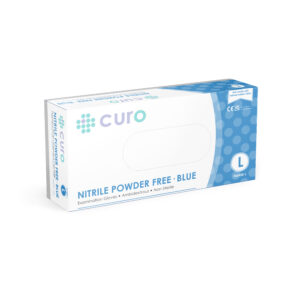
Able’s in-house Curo brand gloves offer strong quality for non-sterile use.
Synthetic examination gloves can also offer a good level of protection. They are often softer and more flexible than standard vinyl, while remaining a lower-cost alternative to nitrile in some situations.
When to Wear Non-Sterile High-Protection Gloves
- Where there is a risk of contact with blood
- Procedures involving higher risk of exposure to blood borne viruses
- Handling cytotoxic material
- Handling disinfectants
- Venepuncture or cannulation
- Vaginal examination
- Basic care and specimen collection involving known or suspected BBV risk
- Non-surgical dentistry or podiatry
- Handling dirty or used instruments
If you are not sure which glove standard is most appropriate for your setting, we can help you review your options.
Non-Sterile Gloves for Lower-Risk Tasks
Medical-grade vinyl examination gloves with an appropriate AQL can still be suitable for lower-risk procedures. They offer a lower level of protection than nitrile, but they may still be acceptable where there is no likely exposure to blood and the task is short in duration.
That said, relying on vinyl in situations involving blood or higher contamination risk can increase the chance of tearing and cross-contamination. In care settings, vinyl is best reserved for low-risk procedures.
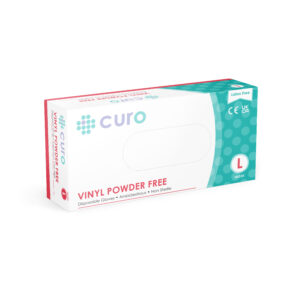
Our Curo Vinyl Powder Free gloves remain a popular value option for lower-risk work.
When to Wear Lower-Protection Gloves
Lower-risk gloves may be suitable for procedures that do not involve blood and carry only a limited contamination risk, such as:
- Oral care
- Emptying catheter drainage bags
- Emptying urinals, bedpans, and suction jars
- Handling low-risk specimens
- Clinical cleaning
- Dressing wounds where contact with blood or body fluids is unlikely
- Endotracheal suction
- Applying creams
- Touching residents with certain low-contact skin concerns
- Making beds or changing clothing for residents in isolation, where risk has been assessed appropriately
Disposable Gloves and COSHH Compliance in Care Homes
Disposable gloves also form part of wider COSHH and chemical-safety procedures within care homes. Staff using disinfectants, cleaning chemicals, laundry products, or decontamination solutions should understand which glove materials provide suitable protection for different substances.
For example, nitrile gloves are often preferred for stronger cleaning chemicals because they generally provide better chemical resistance than standard vinyl gloves. Matching glove type to task helps reduce contamination risks while supporting safer infection-control procedures.
Our guide to COSHH risk assessments in care homes explains how managers can document PPE requirements, hazardous substances, and chemical-control procedures more effectively.
Are Gloves Always Necessary?
Gloves are not required for every procedure. For tasks where there is minimal risk of cross-infection and no expected contact with blood or bodily fluids, gloves may not be necessary.
Examples include:
- Basic care procedures without contact with blood or bodily fluids
- Transferring food from food trolleys to residents
- Making uncontaminated beds or changing uncontaminated clothing
- Taking routine observations such as blood pressure, temperature, or pulse
- Closed endotracheal suction
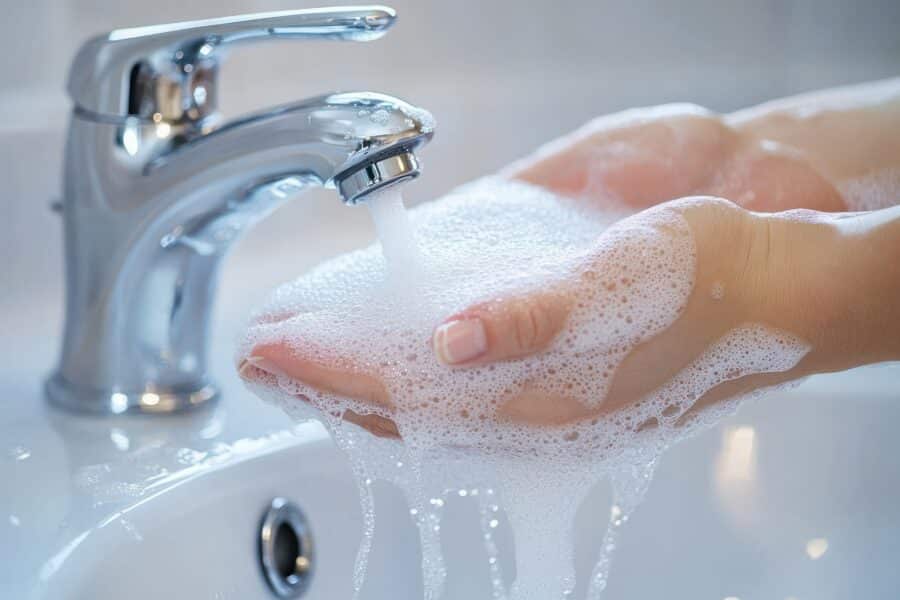
Even so, glove use should always be based on task-specific risk rather than habit alone. Good hand hygiene remains just as important. You can also read more about this in our guide to what could be lurking on your hands and how to sanitise them properly.
If you’re comparing glove types more broadly, our guide to vinyl vs nitrile gloves explains the differences in more detail.
Choosing Gloves with Confidence
Able works with leading suppliers of medical examination gloves to help care homes access suitable, high-quality options for different risk levels and budgets.
Our gloves are manufactured to BS EN 455 standards and are continually quality-checked to support safe use in care environments, especially when used alongside a clear cleaning schedule for care homes that supports infection control routines. That means we can help you choose products that fit your application properly, rather than simply recommending one glove for every task.
If you want help with samples, pricing, or choosing the right glove mix for your care home, our team can help.
Choosing Disposable Gloves for Different Care Home Tasks
Different care-home tasks may require different types of disposable gloves depending on contamination risk, chemical exposure, and infection-control requirements.
Common examples include:
- Nitrile gloves: Often used for infection-control cleaning, chemical handling, laundry work, and higher-risk contamination tasks.
- Vinyl gloves: Commonly used for lower-risk personal care tasks, food preparation, and short-duration activities where strong chemical resistance is not required.
- Disposable medical gloves: Used during clinical procedures, resident care, and situations requiring stronger barrier protection.
Selecting the correct glove type helps care homes maintain safer hygiene systems while reducing unnecessary PPE waste and improving staff protection.
Clear glove-selection policies also support more consistent infection-control cleaning procedures across kitchens, bathrooms, laundry areas, and communal care environments.
Disposable Gloves FAQs
When should I use nitrile instead of vinyl?
For high-risk tasks or contact with blood/chemicals—nitrile offers stronger protection.
Are latex gloves still recommended in care homes?
Often avoided due to allergies; many sites run latex-free and use nitrile or synthetics.
What does AQL mean for gloves?
It’s the defect rate threshold; lower AQL = fewer pinholes and higher protection.
Do I need sterile or non-sterile gloves?
Sterile for surgical/aseptic procedures; non-sterile for routine clinical tasks.
What are “high-protection” non-sterile uses?
Blood exposure, BBV risk, disinfectants, venepuncture, and similar procedures.
When are vinyl gloves acceptable?
Low-risk, short tasks without blood exposure—e.g., basic care or light cleaning.
Are gloves always necessary?
Not for minimal-risk tasks without fluids—but they’re a smart precaution in care homes.