

Vinyl vs Nitrile Gloves: Which Is Best for Your Care Home?
When comparing vinyl vs nitrile gloves, many care-home managers want to understand which option offers the best balance of protection, cost, and practicality. Both glove types are widely used in healthcare and care environments, but they serve different purposes depending on the task.
The debate around glove types intensified during the COVID-19 pandemic. For years before, vinyl gloves were the go-to option in care homes. During Covid, widespread government supply made nitrile gloves more common, and many providers have continued using them since. Both options have clear benefits and drawbacks depending on how they are used.
If you’re reviewing glove usage across your care home and want to make sure you’re using the right type for each task, we can help.
Vinyl Gloves in Care Homes
Vinyl gloves are commonly used for routine care-home tasks that don’t involve direct contact with bodily fluids. This includes cleaning, food preparation, and light resident support.
Their affordability makes them a practical choice for high-volume, everyday use. However, their level of protection is lower than nitrile, and they are more prone to tearing under pressure.
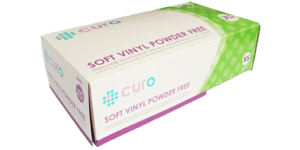
Vinyl gloves are comfortable and cost-effective for low-risk tasks
What Are Vinyl Gloves Used For?
Vinyl gloves are best suited for low-risk tasks where protection is needed but exposure risk is minimal. In care homes this commonly includes:
- Food preparation and kitchen work
Proper glove selection also forms part of wider care home kitchen hygiene procedures, particularly where staff move between food preparation, cleaning, and resident-support tasks. Using the correct PPE alongside safe surface-cleaning routines helps reduce contamination risks and supports infection-control compliance in kitchen areas.
- Serving meals or refreshments
- Routine cleaning tasks that do not involve strong chemicals
- Short-duration resident assistance
Because vinyl gloves are inexpensive and comfortable for short periods, they are widely used for high-volume daily tasks where gloves are changed frequently.
Nitrile Gloves: Higher Protection at a Cost
Nitrile gloves are widely considered the gold standard in healthcare environments due to their durability and protective qualities.
They offer:
- High strength and durability – less likely to tear during use
- Chemical resistance – suitable for cleaning products and disinfectants
- Latex-free – safe for allergy-sensitive environments
- Puncture resistance – better for higher-risk or clinical tasks
The main drawback is cost. Nitrile gloves are more expensive than vinyl, which can impact budgets if used across all tasks.

Nitrile gloves provide higher protection but at a higher cost
What Are Nitrile Gloves Used For?
Nitrile gloves are designed for higher-risk tasks where stronger protection is required. In care homes they are typically used for:
- Personal care involving bodily fluids
- Clinical tasks and wound care
- Handling cleaning chemicals or disinfectants
- Bathroom and infection-control cleaning
- First aid or medication support
Because nitrile gloves resist tearing, chemicals, and punctures better than vinyl, they are generally recommended when infection control or exposure risk is higher.
Vinyl vs Nitrile Gloves: Key Differences for Care Homes
Quick Comparison
Comfort
- Vinyl: Soft, flexible, ideal for short-duration tasks
- Nitrile: Snug fit, more form-fitting
Protection
- Vinyl: Limited; not suitable for high-risk exposure
- Nitrile: High protection; resistant to tears and punctures
Durability
- Vinyl: More prone to tearing under strain
- Nitrile: Highly durable and longer-lasting
Cost
- Vinyl: Lower cost; suitable for bulk daily use
- Nitrile: Higher cost; but more reliable in demanding tasks
Best Use
- Vinyl: Cleaning, food prep, low-risk care
- Nitrile: Clinical tasks, chemical handling, infection control
Difference Between Vinyl and Nitrile Gloves
The main difference between vinyl and nitrile gloves lies in their material strength and level of protection.
Vinyl gloves are made from PVC and are designed for short-term, low-risk tasks. Nitrile gloves are made from a synthetic rubber that provides better durability, puncture resistance, and chemical protection.
Because of this, nitrile gloves are typically preferred in clinical environments, while vinyl gloves remain useful for everyday care-home activities where cost efficiency matters.
Infection Control and Compliance
Glove choice is directly linked to infection control and regulatory compliance. Using the wrong glove for a task increases the risk of cross-contamination and can impact inspection outcomes.
- Low-risk tasks (e.g. food service, surface cleaning) → vinyl is usually sufficient
- Higher-risk care tasks (e.g. bodily fluids, medication, bathroom cleaning) → nitrile is recommended
Staff training should cover not just when to wear gloves, but which type to use, supported by a structured daily cleaning schedule for care homes that reinforces consistent infection-control routines. This is often reinforced through COSHH and infection control training. Clear COSHH compliance in care homes also depends on staff understanding chemical risks, PPE requirements, and safe handling procedures for the products they use every day. Our guide to COSHH risk assessments in care homes explains what managers should document and review to maintain safer cleaning systems and stronger inspection readiness.
If you’re unsure whether your current glove usage aligns with best practice, we can review your setup and provide practical recommendations.
Environmental Impact
Sustainability is becoming an increasing consideration for care providers.
- Vinyl gloves are petroleum-based and not biodegradable
- Nitrile gloves are also synthetic, though some lower-impact options are emerging
Care homes looking to reduce waste should speak to suppliers about more sustainable options and ensure correct disposal procedures are followed.
Practical Scenarios in Care Homes
- Serving food → Vinyl (cost-effective and appropriate)
- Resident hygiene support → Nitrile (higher protection)
- Cleaning rooms → Vinyl (if no chemical exposure)
- Handling chemicals → Nitrile (chemical resistance)
- First aid or wound care → Nitrile (infection control)
Pro Tip: Reusable gloves (e.g. leather or industrial types) are not suitable for care environments. Disposable gloves should always be used to maintain hygiene standards.
What About Latex Gloves?
Latex gloves were once widely used in healthcare, but allergy risks have reduced their use in care homes. Vinyl and nitrile are now more commonly recommended.
Bottom Line
- Vinyl gloves: cost-effective, suitable for low-risk tasks
- Nitrile gloves: higher protection, essential for clinical and high-risk work
For most care homes, a combination of both is the most practical approach—using vinyl where appropriate and nitrile where higher protection is required.
If you’d like help reviewing your PPE setup, costs, or product selection, our team can provide tailored advice.
Vinyl vs. Nitrile Gloves FAQs
Why are nitrile gloves more expensive than vinyl?
Nitrile gloves are made from stronger synthetic material that resists punctures, chemicals, and tearing. This durability and protection makes them costlier, though they can save money long-term by reducing waste and risk.
Which glove type is best for infection control?
Nitrile gloves are the gold standard for infection control in care homes. They protect against bodily fluids, chemicals, and cross-contamination more effectively than vinyl.
Should care homes stop using vinyl gloves completely?
Not necessarily. Vinyl gloves are still useful for low-risk jobs such as cleaning, food service, and light support tasks. Nitrile should be reserved for high-risk or clinical care activities.
What about latex gloves—are they still used in care homes?
Latex gloves used to be common, but allergy concerns have reduced their use in care settings. Today, vinyl and nitrile are the safer and more practical options.