

Essential Fire Evacuation Supplies Every UK Care Home Must Have
Planning for a fire in a care home is a responsibility no one takes lightly. The thought of evacuating residents safely — especially those with mobility issues or cognitive impairments — can feel overwhelming. However, with the right fire evacuation strategy and equipment, care home managers, proprietors, and fire marshals can respond more quickly and confidently.
Every individual, including the most vulnerable, has the right to a safe evacuation during an emergency. That includes residents in care homes, hospitals, and supported living environments. To protect lives, each care home should have a personalised fire evacuation plan built around a thorough fire risk assessment.
If you want help reviewing your current fire evacuation setup, we can help you assess what equipment and processes may be missing.
Why Every Care Home Needs a Fire Evacuation Kit
Following a recent fire policy review, one of our customers contacted us for help. After completing their fire risk assessment, they recognised the urgent need for the right fire evacuation supplies. We sourced a tailored solution to match their needs, and it gave them much greater confidence in their emergency preparedness.
That conversation prompted us to share a practical checklist of fire evacuation supplies for other care homes reviewing their emergency plans.
Hot tip: prevention matters too. Is your fire retardant bedding up to standard?
Fire Evacuation Kit Checklist for Care Homes
Make sure your care home is equipped with the following fire evacuation supplies to help protect residents and staff in an emergency:
- Emergency foil blankets – Help residents stay warm and reduce the risk of shock after evacuation.
- Disposable rain ponchos – Keep residents dry and protected in poor weather.
- Patient ID bracelets and marker pen – Help staff identify and account for residents after evacuation.
- Travel first aid kits – Useful for treating minor injuries during or after evacuation.
- Hands-free LED headlights with batteries – Give fire marshals visibility while keeping hands free to assist residents.
- High-visibility vests – Help identify key staff members during evacuation procedures.
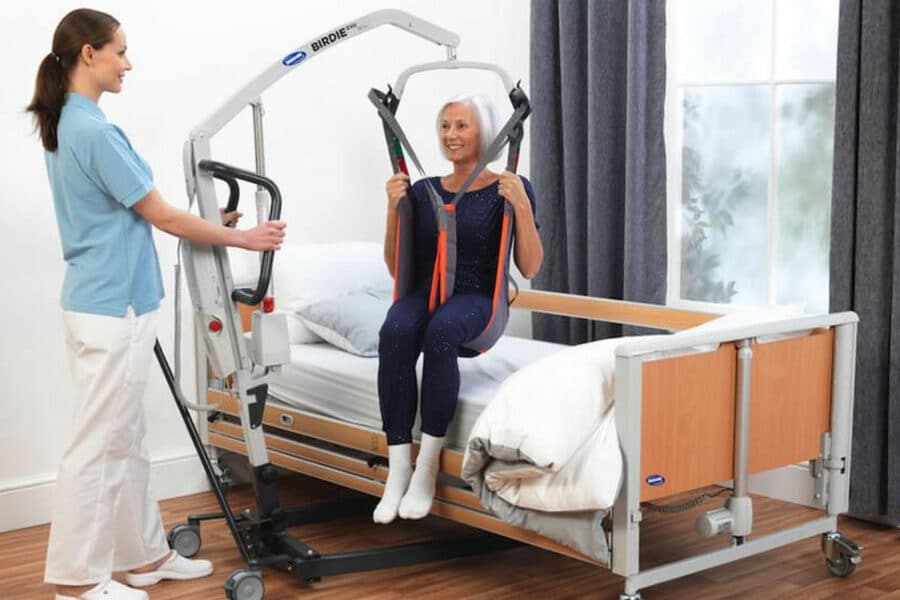
- Transfer aids – Such as ski sheets, transfer boards, and mobile hoists to support residents with limited mobility.
- Fire exit signage and emergency lighting – Help guide people safely out in poor visibility.
- Evacuation maps and instructions – Make routes and procedures clear throughout the building.
If your home is unsure whether it has the right mix of evacuation equipment, it may be worth reviewing your kit before an emergency forces the issue.
A Successful Evacuation Starts With a Practised Plan
Stocking the right equipment is only half the job. A well-practised fire evacuation plan is what really helps save lives. Run regular fire drills, keep evacuation routes clear, and make sure staff understand each resident’s needs through up-to-date Personal Emergency Evacuation Plans (PEEPs).
Preparedness matters because care-home evacuations are rarely straightforward. Staff need to know their responsibilities, where equipment is stored, which residents need extra support, and how to act quickly under pressure.
At the heart of every safe evacuation is one thing: preparedness.
If you would like practical advice on your care home’s fire evacuation kit or planning process, we can help you review it.
Fire Evacuation FAQ’s
What essential items should be in a fire evacuation kit?
Kits typically include foil blankets, ID bracelets, first aid, LED torches, and transfer aids — all designed to protect residents during emergencies.
Why are emergency blankets and ponchos important in fire safety?
They keep residents warm, dry, and protected once outside, helping reduce shock and discomfort after evacuation.
How do fire marshals safely evacuate residents with limited mobility?
By using equipment such as ski sheets, transfer boards, or mobile hoists to ensure safe and dignified movement.
Why should care homes run regular fire evacuation drills?
Practice ensures staff know their roles, routes stay clear, and residents can be moved quickly in a real emergency.
What role do Personal Emergency Evacuation Plans (PEEPs) play in fire safety?
PEEPs outline each resident’s specific needs so evacuations can be carried out safely and efficiently.