

Patient slings are classed as lifting accessories and must undergo regular inspection under LOLER regulations. While most people understand that moving and handling equipment requires routine servicing, lifting accessories are often overlooked. However, patient slings fall under the same legal requirements as hoists and lifts, meaning they must be inspected, maintained, and documented to remain safe and compliant.
If you’re unsure whether your current sling inspection process meets LOLER requirements, our team can help you review your setup.
What is LOLER?
LOLER applies to all lifting equipment and operations in the workplace, whether it’s used for people or objects. That means patient lifting slings also fall under these regulations. Slings are essential to the lifting process and must meet the same safety standards as hoists and lifts.
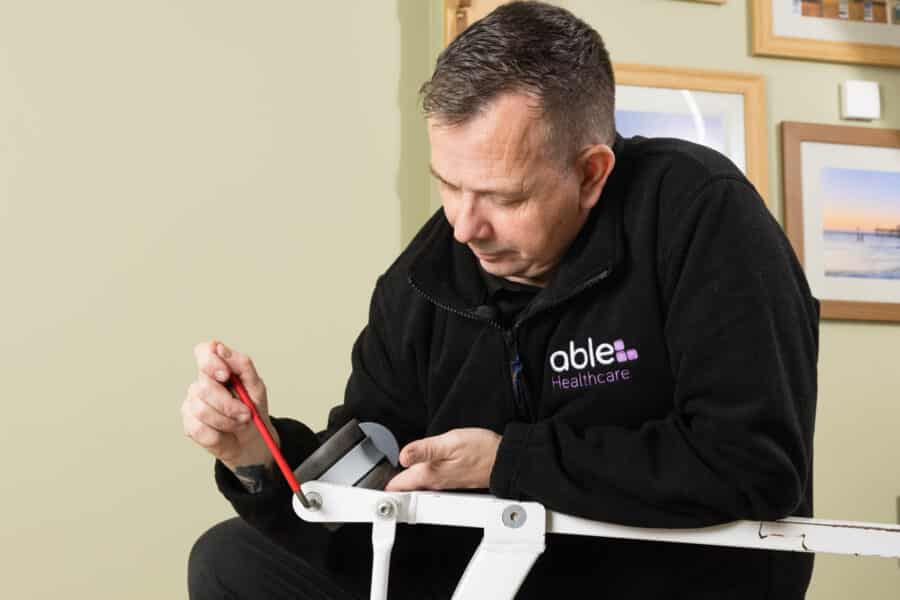
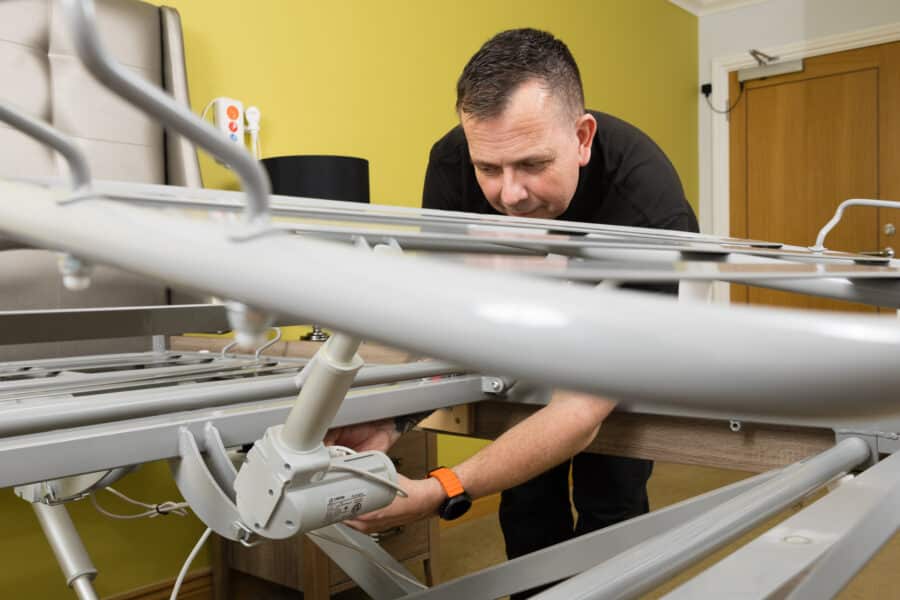
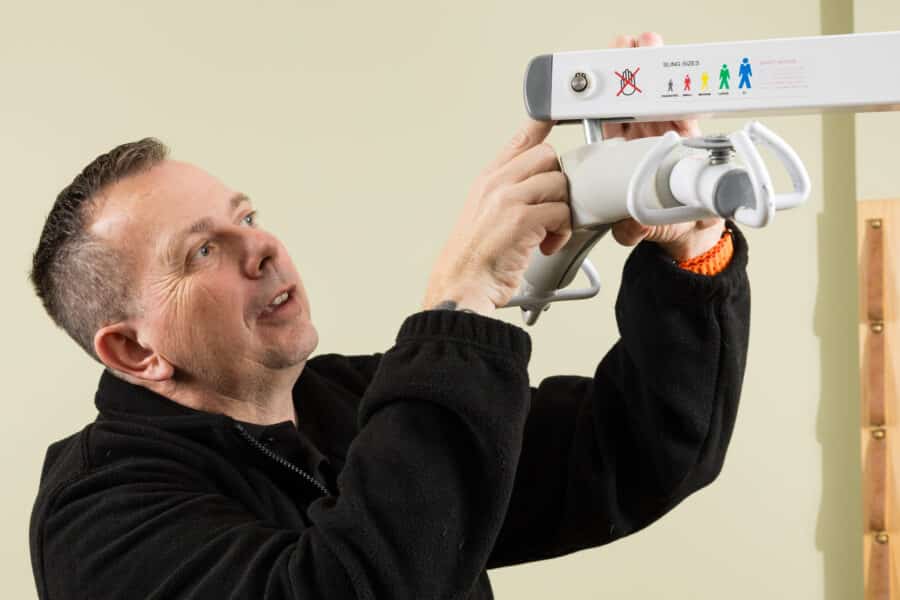
Able engineer James completing a thorough LOLER test and hoist service
Key LOLER Definitions from the HSE
Understanding two core definitions from the Health and Safety Executive (HSE) helps clarify responsibilities:
- Lifting equipment: Any work equipment used to lift or lower loads.
- Accessory for lifting: Equipment used to attach a load to a lifting machine.
What Does the Law Require?
According to the HSE, lifting accessories (like slings) must be thoroughly examined every six months, or in line with a formal inspection scheme. You must also ensure that any lifting gear exposed to wear or deterioration is checked regularly by a competent person. Learn more about who can complete a LOLER examination here.
If you need support organising inspections or confirming compliance, we can help you put a clear schedule in place.
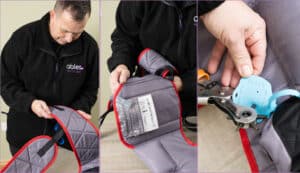
An equally thorough and important test is completed on an accompanying sling
Our Approach to Sling Inspections
At Able, our Field Service Engineers carry out six-monthly inspections of patient slings alongside routine LOLER testing and hoist servicing at your care facility.
By inspecting your slings during the same visit, we provide:
- LOLER certification for both hoists and slings
- Confidence that your equipment remains safe, compliant, and ready for use
What We Check During Sling Inspections
Each sling undergoes a full inspection based on the following criteria:
- Manufacturer’s label visibility (safe working load, serial number, washing instructions)
- Stitching quality
- Tape condition – no fraying or wear
- Fabric thickness – no thinning
- Stress marks
- Fading or discoloration
- Cleanliness and hygiene
Keeping track of sling condition and inspection schedules can become difficult across multiple sites or large equipment inventories. If you’re finding this hard to manage, we can help simplify the process.
If the sling passes all checks, we issue a detailed inspection report for your records.
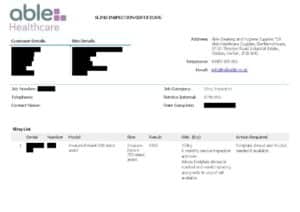
A clear inspection report is provided for your records.
Why Failing a Sling Isn’t Always a Bad Thing
Sometimes slings fail inspections due to worn edging, frayed tape, or damaged Velcro. While it may feel frustrating, identifying these issues early prevents accidents and protects both residents and staff.
Most care providers value the reassurance that faults are identified before they become serious risks, helping maintain safe and compliant environments.
If you’d like support reviewing your equipment, organising inspections, or improving your LOLER process, our team is here to help.
Care Home Slings FAQ’s
How often should a sling be inspected in care homes?
Every six months, or more often if wear and tear is a concern.
What does a sling inspection actually check for?
Labels, stitching, fabric condition, and overall safety compliance.
Who is qualified to carry out LOLER sling examinations?
Only a competent person, such as a trained and certified service engineer.
What happens if a sling fails a LOLER test?
It must be taken out of service immediately and either repaired or replaced.
Can slings and hoists be tested at the same time?
Yes, many providers combine them in a single visit to save time.
Why is it risky to skip sling inspections?
Small faults can quickly become dangerous, risking resident and staff safety.