

Colour coded cleaning is one of the simplest ways to help prevent cross-contamination in a care home. By assigning particular cleaning equipment to defined areas or tasks, staff can quickly identify what should be used where and avoid moving equipment between higher-risk and lower-risk environments.
But colour coding is about more than buying red, blue, green and yellow cloths. The equipment needs to be used consistently, stored correctly, understood by staff and incorporated into the home’s wider cleaning procedures.
This guide explains the commonly used four-colour cleaning system, what equipment can be colour coded, how to organise storage and how care homes can keep the system working in practice.
If your cleaning cupboards, trolleys or colour coded equipment have become inconsistent over time, Able can help review your current setup and identify practical ways to simplify it.
What Is Colour Coded Cleaning?
Colour coded cleaning uses different coloured cleaning materials and equipment for different areas or types of task.
The aim is to reduce the risk of equipment carrying contamination from one part of the building into another. A mop or cloth used around a toilet, for example, should not then be used in a resident’s bedroom or food-preparation area.
Current government infection-prevention guidance for adult social care specifically identifies colour coding of cleaning materials as one possible arrangement for preventing cross-contamination.
Colour coding should therefore form part of the home’s overall cleaning system alongside appropriate products, cleaning schedules, staff training and equipment decontamination.
What Are the Four Main Cleaning Colour Codes?
A widely used UK healthcare cleaning system uses red, blue, green and yellow to separate different cleaning areas.
Red
Sanitary and washroom areas
Toilets, bathrooms, showers, urinals and sanitary floors.
Blue
General or lower-risk areas
Bedrooms, corridors, offices, lounges and reception areas.
Green
Food and catering areas
Kitchens, food-preparation areas and food-service spaces.
Yellow
Isolation or higher-risk areas
Areas subject to additional infection-prevention measures.
Individual organisations may adapt their system, so staff should always follow the colour allocations documented within their own workplace procedures.
The most important thing is consistency. Everyone using the system should understand what each colour means and where that equipment can and cannot be used.
Why Is Colour Coding Important in Care Homes?
Care homes bring several different environments together within one building. A member of the housekeeping team may move between bedrooms, bathrooms, communal areas, dining spaces, kitchens and higher-risk areas during the same shift.
Without clear separation, cleaning tools themselves can become a route for contamination to move between those areas.
A well-managed colour coding system can help:
- Reduce opportunities for cross-contamination
- Make equipment allocation easier for staff to understand
- Support consistent cleaning between different shifts
- Simplify induction and refresher training
- Make cleaning cupboards and trolleys easier to organise
- Give managers something clear to check during cleaning audits
Colour coding does not make cleaning effective by itself. Staff still need appropriate products, procedures, training and supervision, but the visual system makes those controls easier to follow.
What Cleaning Equipment Should Be Colour Coded?
The system works best when it covers the equipment actually being moved between cleaning areas rather than being limited to one or two products.
Depending on the home’s procedures, colour coding may be applied to:
- Cleaning cloths
- Mop heads
- Mop handles
- Mop buckets
- Brushes
- Dustpans and hand tools
- Reusable cleaning equipment
- Cleaning trolleys or designated trolley sections
- Other cleaning materials where colour separation is useful
For example, using a red cloth while the same bucket, mop or trolley is moved through every cleaning zone can weaken the separation the colour system is intended to create.
It is therefore better to review the complete cleaning setup rather than individual items in isolation.
Our care home cleaning products and supplies guide covers the wider range of chemicals, consumables and equipment typically used alongside a colour coded system.
Colour Coded Mops and Buckets
Floor-cleaning equipment is particularly important because mops and buckets can move across large areas of a building.
Using matching colour coded mop heads, handles and buckets makes it easier for staff to keep equipment assigned to the correct zone. The equipment should also be cleaned or decontaminated in accordance with the manufacturer’s instructions after use.
The choice of cleaning chemical matters as well. A colour coded mop identifies where the equipment belongs, but it does not determine which floor-cleaning product is appropriate.
Our guide to using all-purpose cleaner for mopping explains some of the considerations around product choice and floor compatibility.
Colour Coded Cleaning Cloths
Cleaning cloths are another obvious source of cross-contamination if one cloth is moved between incompatible areas.
Colour coded cloths give staff an immediate visual indication of where each cloth should be used. Reusable cloths should be dealt with according to the home’s laundering or decontamination procedures and the manufacturer’s instructions, while single-use materials should be disposed of appropriately after use.
Staff should not rely on colour alone to determine whether a cloth is clean and suitable for reuse.
Cleaning Trolleys and Colour Coding
Cleaning trolleys can make housekeeping more efficient, but they can also undermine colour coding if equipment from several zones becomes mixed together.
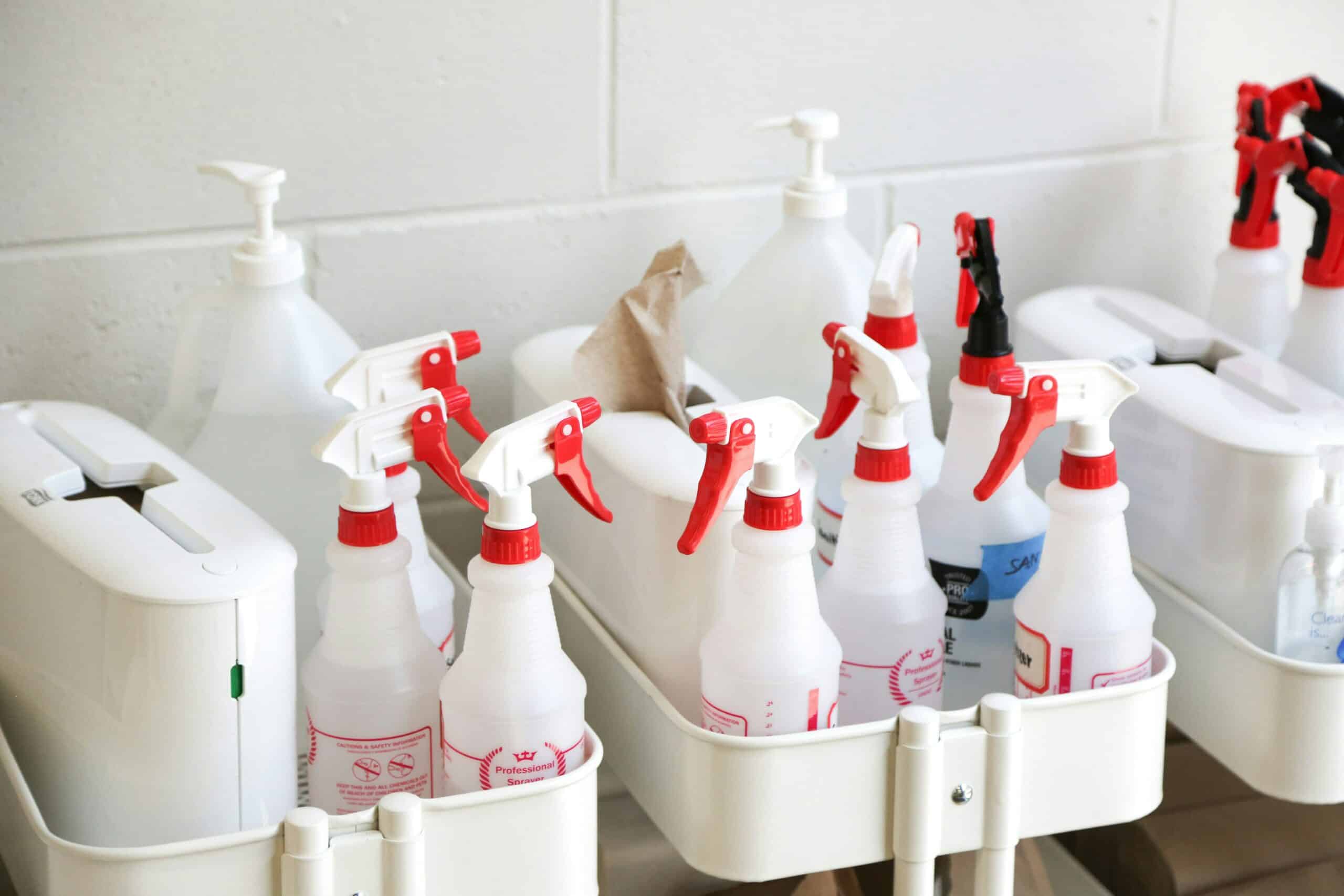
Where one trolley is used across several parts of the home, clearly separated sections can help keep equipment organised. Some homes may instead find dedicated equipment for particular areas more practical.
Whatever approach is used, the trolley should make the colour system clearer rather than becoming a place where cloths, mop heads and cleaning products from different zones are mixed together.
How Should Colour Coded Cleaning Equipment Be Stored?
Storage is where a good colour coding system can easily break down.
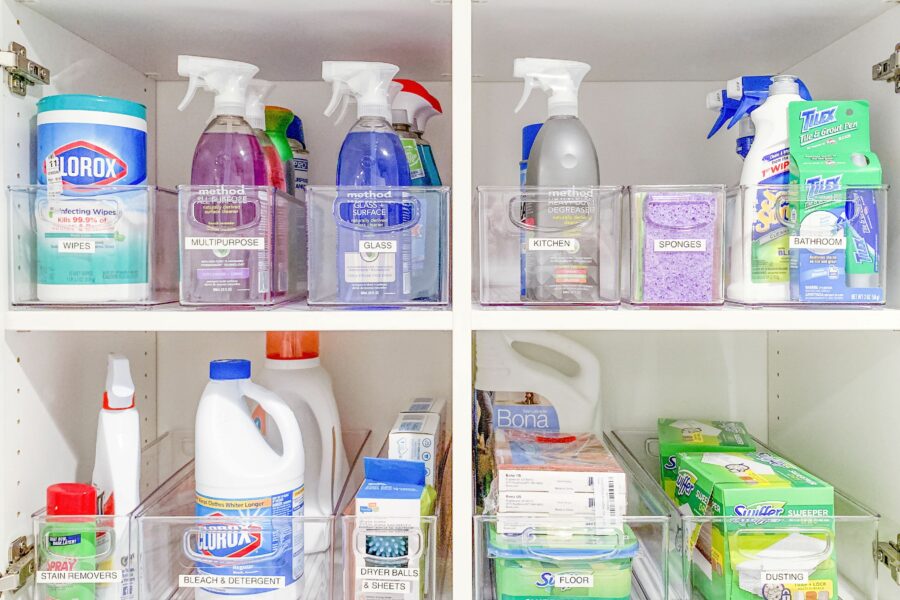
If all four colours are placed together in one cupboard without clear separation, staff have to work harder to identify the correct equipment and used items may become mixed with clean ones.
A practical colour coded storage area may include:
- Separate hooks, shelves or cupboard sections for different colours
- Clear labels showing which cleaning zone each colour represents
- Dedicated sections within cleaning trolleys
- Separation between clean equipment and equipment awaiting cleaning
- Suitable arrangements for drying reusable equipment before storage
- An obvious location for replacement stock
Storage areas should also be included within routine cleaning. Cupboards, shelving and trolleys can accumulate dirt and residues if they are never incorporated into the cleaning schedule.
For wider advice on chemical and equipment storage, see our guide to storing cleaning supplies in a care home.
How to Set Up a Colour Coded Cleaning System
A simple system that staff can follow consistently is usually better than one that becomes unnecessarily complicated.
- Identify your cleaning zones. Map out sanitary areas, general areas, kitchens and any isolation or higher-risk spaces.
- Define the colour system. Document exactly what each colour means within your home.
- Review the equipment. Make sure each area has the cloths, mops, buckets and other equipment staff actually need.
- Organise the storage. Give the different colours obvious locations and keep clean equipment separate from used items.
- Train the team. Show staff the actual cleaning zones, equipment and storage arrangements rather than relying only on written instructions.
- Include it in routine checks. Review whether staff are using and storing the equipment correctly during cleaning audits.
A clear care home cleaning schedule can help connect colour coding with the areas, cleaning tasks and responsibilities assigned to staff.
Training Staff on Colour Coded Cleaning
Colour coding is easy to understand visually, but staff still need practical training.
They should know:
- What each colour means within the home
- Which areas each colour can be used in
- Which equipment forms part of the system
- Where clean equipment should be stored
- What should happen to equipment after use
- What to do when the correct colour is unavailable
- Who to ask if they are unsure about the procedure
Colour coding should be included in induction for relevant staff and revisited when procedures, equipment or cleaning arrangements change.
Common Colour Coding Mistakes
The biggest problems usually occur when a system is introduced correctly but gradually becomes inconsistent.
Common mistakes include:
- Using one colour in the wrong cleaning zone
- Mixing different coloured equipment together in storage
- Replacing worn equipment with whatever colour happens to be available
- Moving buckets or trolleys between areas without maintaining separation
- Failing to train new, temporary or agency staff
- Keeping damaged or worn equipment in use
- Allowing used equipment to be stored with clean equipment
- Changing procedures without updating labels or staff guidance
If the system becomes difficult to follow during a busy shift, that is often a sign that the equipment or storage arrangement needs simplifying.
Colour Coding and Cleaning Audits
Managers should periodically check whether the colour coding system is working in practice rather than simply confirming that coloured equipment exists.
An audit might look at:
- Whether the right equipment is available in each colour
- Whether the correct equipment is being used in each zone
- Whether staff understand the colour allocations
- Whether storage areas keep the colours clearly separated
- Whether clean and used equipment are kept apart
- Whether worn or missing equipment is replaced
- Whether trolley arrangements support rather than undermine the system
Our cleaning audit checklist provides a wider framework for reviewing day-to-day cleaning standards.
Colour Coding, Cleaning Chemicals and COSHH
Colour coding mainly controls the movement of cleaning equipment. Chemical safety still needs to be managed separately.
Cleaning products should be selected for the task, stored correctly and managed under the home’s COSHH arrangements. Staff need to understand both which equipment belongs in an area and which cleaning product should be used for the task.
For example, products and equipment used in food-preparation areas need different consideration from those used in washrooms or during enhanced cleaning.
See our guide to COSHH risk assessments in care homes for more on managing cleaning chemicals safely.
Kitchen Colour Coding
Kitchens and food-preparation areas are commonly represented by green within the four-colour cleaning system.
The important principle is to keep kitchen cleaning equipment separated from equipment used in sanitary, general or isolation areas. This can apply to cloths, mops, buckets and other tools used within the food environment.
The colour system should sit alongside the home’s wider food hygiene and cleaning arrangements rather than replace them.
For a more detailed look at food-area cleaning, see our care home kitchen hygiene guide.
Reviewing Your Colour Coded Cleaning Storage
Even a good system can deteriorate over time as staff change, equipment is replaced and cleaning cupboards gradually fill with different products.
It is worth periodically asking:
- Can staff explain what each colour means?
- Is the correct equipment available for every cleaning zone?
- Is equipment stored somewhere obvious?
- Are clean and used items clearly separated?
- Have mismatched replacement items entered the system?
- Are cupboards and trolleys themselves clean and organised?
- Does the system work across every shift and not just during audits?
Often, improving the system is less about adding more products and more about removing unnecessary variation.
Colour Coded Cleaning Equipment and Supplies from Able
Able supplies professional cleaning and hygiene products for care homes and other commercial environments, including cleaning hardware, chemicals, paper products and everyday hygiene supplies.
We can also review the way your current equipment and products are organised. A free hygiene consultation gives you an opportunity to discuss colour coding, storage, product selection and any areas where the cleaning setup has become difficult for staff to manage consistently.
If you are reviewing your cleaning equipment, reorganising your cleaning cupboards or want a second opinion on the system currently being used across your home, speak to our team.
Colour Coded Cleaning in Care Homes FAQs
What are the four main cleaning colour codes?
A widely used UK system uses red for sanitary and washroom areas, blue for general lower-risk areas, green for kitchens and food areas, and yellow for isolation or higher-risk areas. Organisations should follow the colour system documented within their own cleaning procedures.
What colour cleaning equipment is used for toilets and bathrooms?
Red is widely used for toilets, bathrooms, washrooms and other sanitary areas within the common four-colour cleaning system.
What colour cleaning equipment is used in kitchens?
Green is commonly used for kitchens, food-preparation areas and food-service spaces within the four-colour cleaning system.
Is colour coded cleaning required in care homes?
Adult social-care infection-prevention guidance identifies colour coding of cleaning materials as one arrangement that can help prevent cross-contamination. Care homes should have clear cleaning procedures and ensure staff consistently follow the system adopted by the organisation.
What cleaning equipment should be colour coded?
Colour coding may be applied to cleaning cloths, mop heads, mop handles, buckets, brushes, dustpans, reusable cleaning equipment and cleaning trolleys or trolley sections.
How should colour coded cleaning equipment be stored?
Different colours should be stored in clearly identified and separated locations. Clean equipment should also be kept separate from used equipment, and reusable items should be cleaned or decontaminated according to the manufacturer's instructions before storage.
How should care homes check their colour coding system?
Colour coding can be included within routine cleaning audits. Managers can check whether the correct equipment is available, used in the right areas, stored correctly, understood by staff and replaced when it becomes damaged or missing.