

Choosing cleaning products for a care home is about more than finding something that removes dirt.
A good cleaning range needs to support infection prevention, be practical for staff to use, suit the surfaces and tasks within the home, and be managed safely under COSHH. It also needs to work commercially: too many products, inconsistent dosing and unsuitable chemicals can increase costs without improving cleaning standards.
This guide covers the main cleaning products and supplies used in care homes, what to consider when choosing them and how to review an existing range.
Reviewing your current cleaning range? Able can help assess the products you use, identify unnecessary duplication and recommend a practical cleaning and hygiene setup for your home.
What Cleaning Products Does a Care Home Need?
The exact range will depend on the home, its residents, surfaces, infection-control procedures and risk assessments. However, most care home cleaning systems will include:
- General-purpose or multi-purpose cleaners for routine cleaning
- Disinfectants suitable for the required task and level of infection risk
- Floor cleaners suited to the flooring within the home
- Washroom and toilet cleaning products
- Descalers for hard-water deposits where required
- Kitchen cleaners, degreasers and appropriate sanitisers
- Odour-control products
- Cleaning cloths, mops, buckets and other colour-coded equipment
- Suitable gloves, PPE and supporting hygiene consumables
The important point is not simply having all of these products. Each one should have a defined purpose so staff know what to use, where to use it and how to use it correctly.
Government infection-prevention guidance for adult social care specifically highlights the importance of defining cleaning responsibilities, frequencies, methods, products, training and arrangements to prevent cross-contamination.
Cleaning and Disinfection in Care Homes
Cleaning and disinfection are related, but they are not the same thing.
Routine cleaning removes dirt, organic matter and contamination from a surface. Disinfection uses a suitable product or process to reduce or destroy microorganisms. Depending on the task, a care home may use a separate cleaner and disinfectant or a product designed to perform both functions.
For high-touch areas such as door handles, handrails, tables and shared equipment, product choice should reflect the home’s infection-prevention procedures and the manufacturer’s instructions.
Contact time also matters. A disinfectant cannot be assumed to work immediately simply because it has been sprayed onto a surface. Staff need to understand how the product is intended to be used and allow the required contact time where applicable.
During an outbreak or where a particular infection risk has been identified, follow the home’s infection-control policy and the relevant health guidance rather than relying on the normal daily cleaning routine.
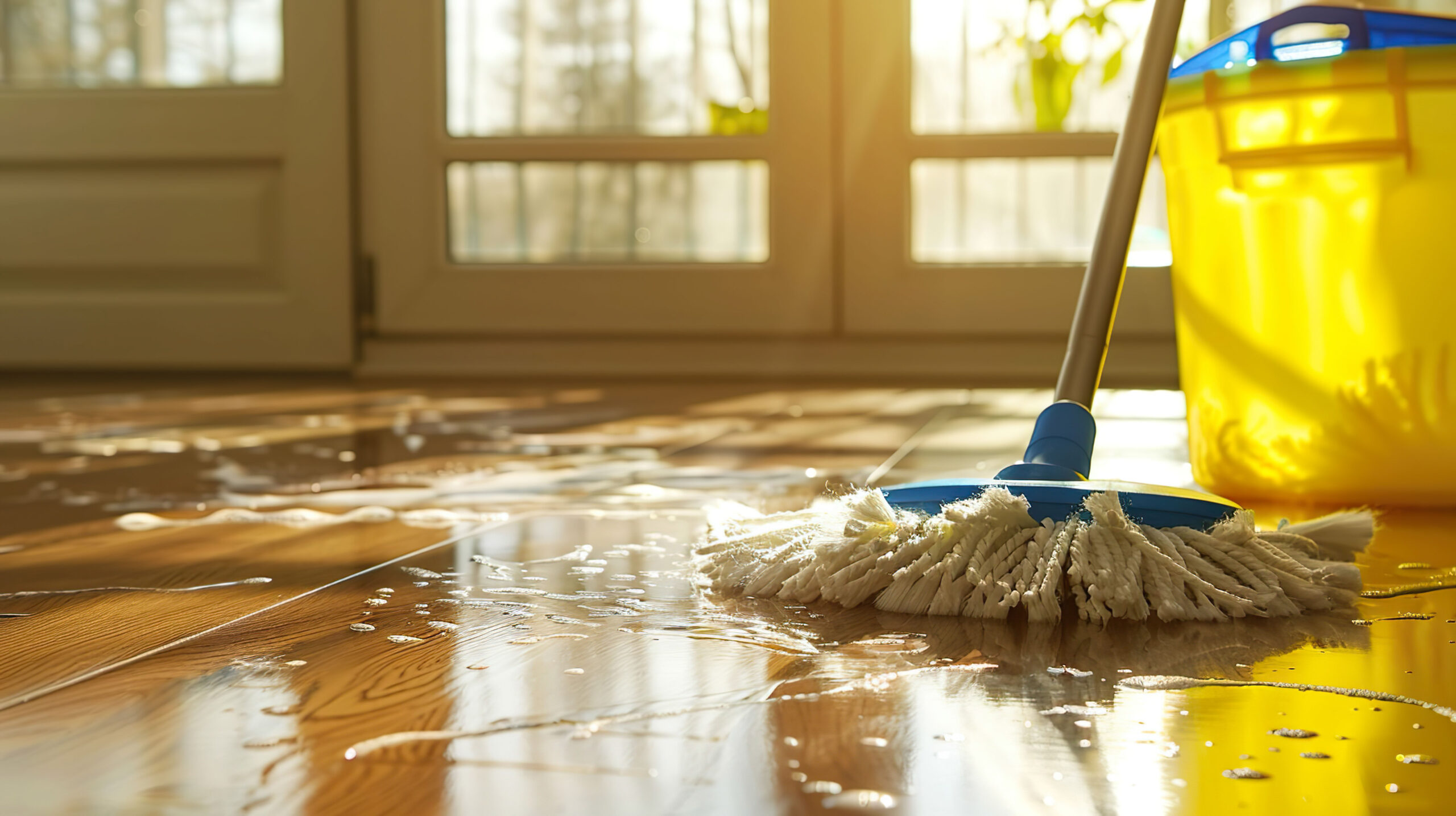
Floor Cleaning Products
Care home floors often deal with heavy footfall, spills and frequent cleaning, so choosing the right floor chemical matters.
For routine hard-floor cleaning, a suitable neutral or general floor cleaner may provide everything needed. Heavier soiling, specialist flooring or particular hygiene requirements may call for a different product.
Avoid assuming that a stronger chemical automatically gives a better result. Incorrect products can leave residues, affect floor finishes or make cleaning unnecessarily difficult.
The cleaning chemical also needs to work with the home’s mop and equipment system. Using colour-coded cleaning equipment can help keep materials assigned to particular areas and reduce opportunities for cross-contamination.
For more guidance on floor care, see our guide to using all-purpose cleaner for mopping and our guide to the best mop systems for care homes.
Washroom Cleaning Products
Care home washrooms need products that deal with several different problems.
Routine surface cleaning, toilet cleaning, limescale, body-fluid contamination and odour control are not necessarily best handled by the same product.
A good washroom setup should make it obvious which product staff use for each task while keeping the total range manageable. Where hard water creates scale around taps, sanitary fittings or shower areas, a suitable descaler may also form part of the routine.
Odour control should complement proper cleaning rather than replace it. Products that address the source of an odour are generally more useful than simply adding fragrance to the room.
Kitchen Cleaning Products
Care home kitchens have different cleaning requirements from bedrooms, corridors and communal areas.
Grease and food residues may require a dedicated degreaser, while food-contact surfaces need to be cleaned using products and methods suitable for the task. Kitchen cleaning procedures should also fit with the home’s food-safety arrangements and avoid unnecessary cross-use of equipment between areas.
Keeping kitchen cleaning equipment clearly separated from equipment used elsewhere in the home can make routines easier for staff to follow.
For more detailed guidance on cleaning food-preparation areas, see our care home kitchen hygiene guide.
How to Choose Safe Cleaning Products for a Care Home
There is no single type of cleaner that is automatically the “safest” choice for every care home.
A better approach is to consider the product, task, people who may be exposed, method of use and level of risk together.
Start with the product label and Safety Data Sheet. These provide information about hazards, handling and controls. Under COSHH, employers then need to assess how staff and others could be exposed and put appropriate controls in place. HSE also advises businesses to consider whether a safer alternative can be used where a substance presents unnecessary risk.
This means you should not simply look for a product described as “COSHH compliant”. COSHH is about how hazardous substances are assessed, controlled, stored and used in the workplace, rather than being an approval badge attached to an individual cleaning product.
Resident needs can also affect product selection. For example, strong fragrances, vapours or particular ingredients may warrant additional consideration where residents or staff have known sensitivities.
Equally, a gentler product is not automatically appropriate for every infection-control task. Effectiveness and safety both need to be considered.
That is why a smaller, properly assessed range is often easier to manage than a cupboard full of overlapping chemicals.
Storage, COSHH and Staff Training
Even a well-chosen cleaning product can create problems if staff use or store it incorrectly.
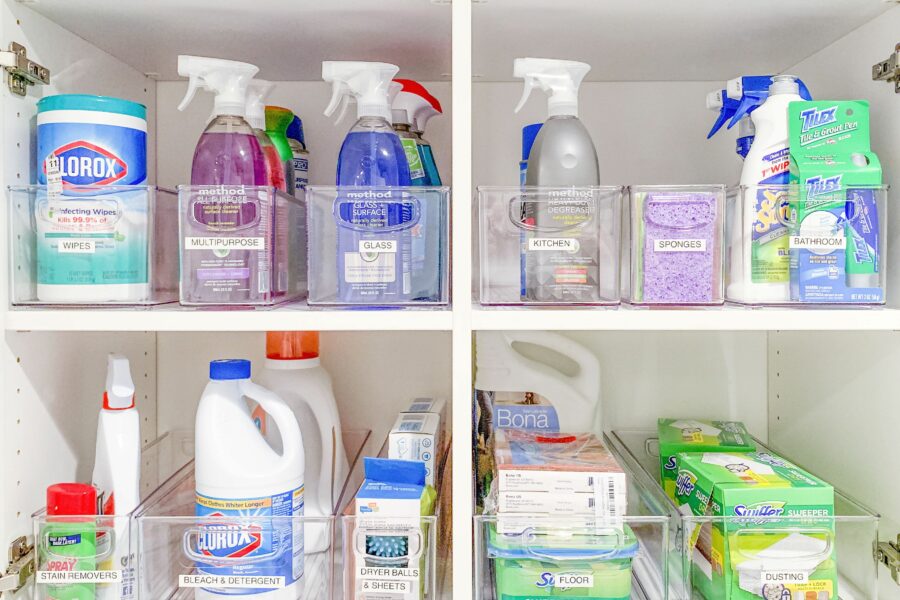
Care homes should have clear arrangements for chemical storage, labelling, spill management and staff training. Where required by the risk assessment, staff should also have appropriate PPE and understand when and how to use it.
HSE recommends using product labels and Safety Data Sheets when identifying chemical hazards, planning appropriate storage, training workers in relevant controls and reviewing assessments when products or processes change.
For more on managing chemical risks, see our guide to COSHH risk assessments in care homes.
Colour-Coded Cleaning Equipment
Cleaning chemicals are only part of an effective system.
Mops, cloths, buckets and other reusable cleaning equipment can themselves contribute to cross-contamination if they move freely between different areas.
Colour coding provides a simple visual system for separating equipment by task or location. Whatever system a home adopts, staff need to understand it and follow it consistently.
Government adult social care guidance specifically identifies colour coding of cleaning materials as one possible measure for preventing cross-contamination.
Our guide to colour-coded cleaning in care homes explains how to organise cleaning equipment and storage so the system is easier for staff to follow.
Cleaning Products vs Cleaning Supplies
People searching for care home cleaning supplies are often looking for more than chemicals.
A complete housekeeping range can also include cloths, scourers, mops, buckets, brushes, bins, waste products, paper consumables, dispensers, gloves and other day-to-day hygiene equipment.
Managing those products together can make purchasing much simpler.
It also gives care homes an opportunity to standardise what staff use across different areas or multiple sites, rather than ordering similar products from several suppliers under different names.
Reviewing Your Existing Care Home Cleaning Supplies
A product review does not necessarily mean replacing everything.
Often the biggest opportunities come from simplifying what is already there.
You may find several products carrying out essentially the same job, products staff rarely use, inconsistent chemical systems between sites, or chemicals that no longer suit the way the home operates.
It is also worth looking beyond the price of an individual bottle. Concentrated products, dosing systems, staff time, rewashing or recleaning, storage space and the number of different products being ordered can all affect the true cost of a cleaning system.
The goal should be a range that staff understand, performs consistently and is straightforward to purchase and manage.
Care Home Cleaning Supplies from Able
Able supplies professional cleaning and hygiene products for care homes and other commercial environments, including our own Eclipse and Enviro ranges alongside products from established professional manufacturers.
Our cleaning and hygiene range covers chemicals, paper products, cleaning hardware and other everyday supplies, with products shipped directly from our warehouse.
We can also review your existing setup with you.
A free hygiene consultation gives you an opportunity to look at the products you currently use, areas where the range could be simplified and any cleaning, hygiene or infection-control challenges you want help with. We can discuss product options, cost-effective alternatives and practical ways to improve the cleaning and hygiene setup across your home.
Care Home Cleaning Products FAQs
What is the difference between cleaning and disinfecting?
Cleaning removes dirt and contamination from a surface. Disinfection uses an appropriate product or process to reduce microorganisms. Some situations require cleaning before disinfection, while some products combine both functions. Always follow the product instructions and your home's cleaning procedures.
Are household cleaning products suitable for care homes?
Not automatically. A product should be assessed for the task, surface, infection risk and workplace hazards involved. Professional products may also offer clearer dosing systems, Safety Data Sheets and support for commercial cleaning procedures.
What does COSHH mean for care home cleaning products?
COSHH requires employers to assess and control risks from substances that could harm health. For cleaning chemicals, this includes understanding the hazards, considering exposure, putting controls in place and providing appropriate information and training.
Should care homes use colour-coded cleaning equipment?
Colour coding can help keep cleaning materials separated by area or task and reduce the risk of cross-contamination. The important thing is to have a clearly documented system that staff understand and use consistently.
How can a care home reduce its cleaning-product costs?
Start by looking for duplicate products, inconsistent ordering, incorrect dosing and products that staff rarely use. Standardising the range and choosing products based on cost in use rather than bottle price alone can often make purchasing easier and reduce unnecessary waste.