

Operating a care home in Derbyshire comes with many responsibilities, but ensuring resident safety must always remain the priority. One essential step in maintaining high standards is arranging routine inspections of lifting equipment. With professional LOLER testing in Derbyshire, care providers can stay compliant, reduce risk, and demonstrate a clear commitment to safe resident care.
Need help organising LOLER testing across your Derbyshire care home?
LOLER Testing Requirements for Derbyshire Care Providers
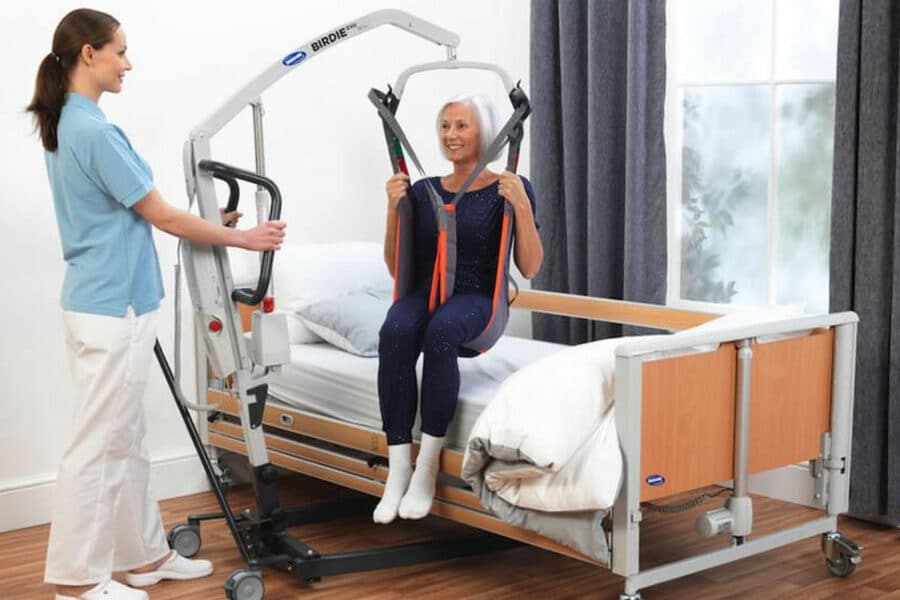
LOLER stands for the Lifting Operations and Lifting Equipment Regulations 1998. These regulations apply to lifting equipment used in care environments, including hoists, slings, stand aids, and mobility equipment.
For care homes in Derbyshire, LOLER testing helps ensure lifting equipment remains safe, functional, and legally compliant. Because LOLER inspections are a statutory requirement, providers must take a proactive approach. Delaying inspections can increase safety risks, create compliance issues, and lead to unnecessary operational disruption.
Regular LOLER testing supports:
- Resident safety and dignity
- Safer moving and handling procedures
- Reduced equipment failure risk
- Clear compliance documentation
- Confidence during CQC inspections
How Frequently Is LOLER Testing Required?
In most care homes, LOLER inspections must take place every six months where equipment is used to lift people. This inspection frequency helps identify faults before they create safety risks or equipment breakdowns.
Equipment not used for lifting people may only require annual inspections, depending on how the equipment is used and the associated level of risk.

Routine LOLER testing helps Derbyshire care homes maintain lifting equipment safety and compliance.
LOLER Inspections: 6 or 12 Months?
- Every 6 months: Patient lifting equipment such as mobile hoists, ceiling track hoists, stand aids, and lifting accessories.
- Every 12 months: General lifting equipment not used for lifting people.
Where uncertainty exists, care homes should always seek guidance from a qualified LOLER inspection provider who understands the care sector.
Unsure which items in your home require six-month LOLER inspections?
Who Is Qualified to Perform LOLER Testing?
Only a competent person can carry out LOLER inspections. This means someone with the appropriate training, technical knowledge, practical experience, and independence from the equipment’s daily use.
Our LOLER engineers supporting Derbyshire care homes carry out inspections in accordance with current regulations and understand the specific requirements of healthcare lifting equipment.
Importantly, competent inspectors must also be able to identify defects, assess risk levels, and recommend appropriate corrective actions where necessary.
What Happens During a LOLER Inspection?
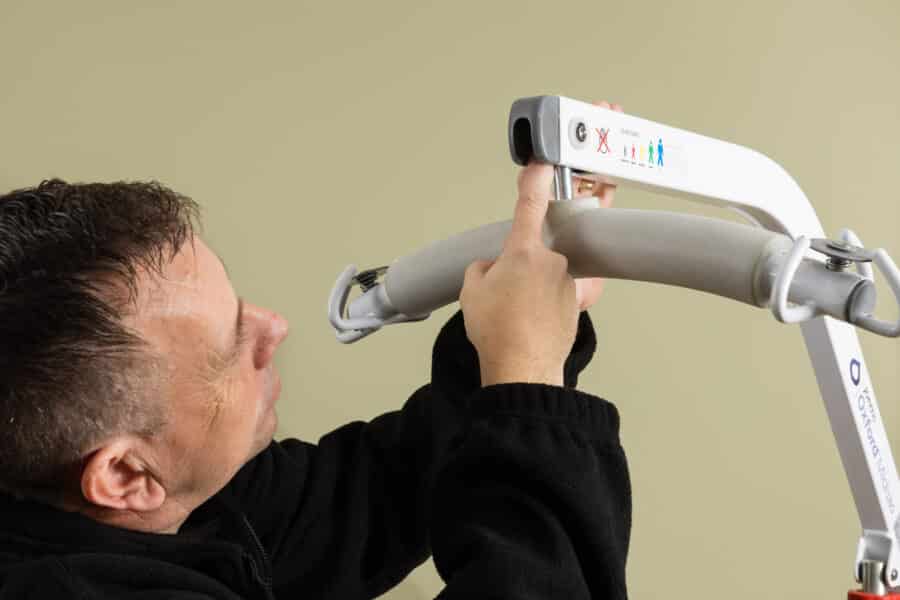
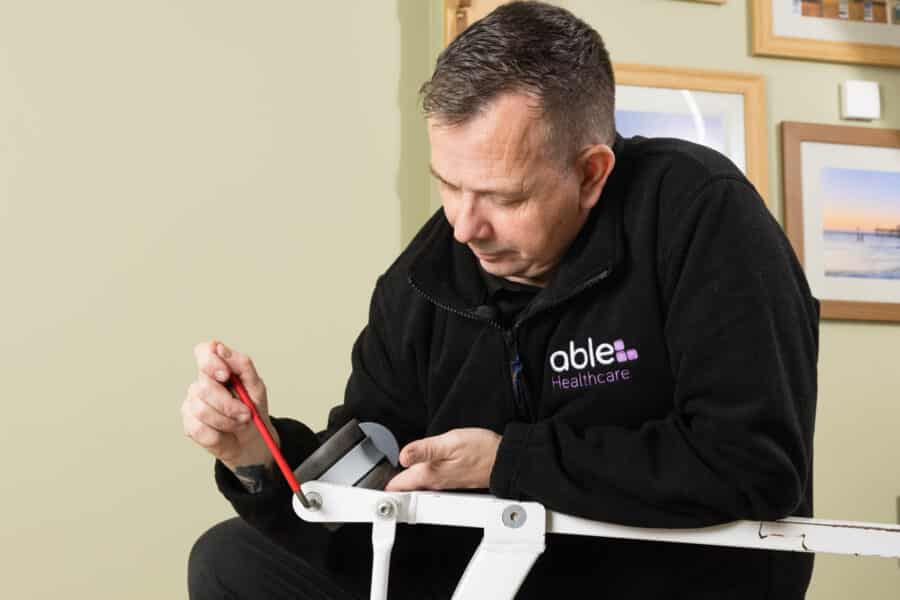
During a LOLER inspection, engineers thoroughly assess lifting equipment to confirm safe operation and compliance.
A standard LOLER test typically includes:
- Inspection of hoists, slings, and lifting accessories
- Checks for wear, damage, and mechanical faults
- Assessment of controls, brakes, and structural integrity
- Safe working load testing where required
- Documentation of defects and corrective actions
- Issuing LOLER certification for compliance records
Every inspection aims to protect residents, support staff safety, and reduce equipment downtime.
However, our LOLER testing service goes further by:
- Completing full safe working load testing up to 180kg
- Applying unique asset tags for easier equipment identification
- Providing online asset management access for certificates and service history
- Managing inspection scheduling in advance of due dates
- Helping care homes maintain ongoing compliance visibility

Full safe working load testing forms part of comprehensive LOLER inspections in Derbyshire care homes.
Want a more proactive approach to LOLER compliance management?
What Equipment Falls Under LOLER?
Care homes in Derbyshire commonly use lifting equipment that falls under LOLER regulations.
This typically includes:
- Mobile hoists
- Ceiling track hoists
- Patient slings
- Stand aids
- Bath lifts
- Shower chairs
- Transfer accessories
- Electric profiling beds with lifting functions

Sling inspections form a critical part of LOLER compliance in care homes.
If equipment lifts, transfers, or supports residents during movement, it likely requires LOLER inspection.
Homes can strengthen compliance further by following structured guidance such as this resource on LOLER inspection checklists for care homes, which supports consistent record keeping and inspection preparation.
Why Derbyshire Care Homes Choose Able for LOLER Testing
We understand the operational pressures care homes face. Our LOLER testing service is designed to provide clear communication, minimal disruption, and dependable compliance support.
Care homes across Derbyshire choose Able because we provide:
- Experienced healthcare LOLER engineers
- Flexible scheduling around care routines
- Detailed compliance documentation
- Reliable reminders and service planning
- Friendly, practical support from a responsive team
We also stay current with changing regulations and industry expectations, helping care homes remain confident during audits and inspections.
Where lifting equipment management links into wider maintenance systems, many homes also benefit from reviewing their PUWER inspection responsibilities in care homes, ensuring broader equipment compliance remains consistent.
Need urgent support with overdue LOLER inspections?
Schedule Your LOLER Testing in Derbyshire Today
Professional LOLER testing helps protect residents, support staff safety, and maintain legal compliance across your care home.
By arranging inspections proactively, Derbyshire care providers reduce risk, avoid unnecessary disruption, and maintain confidence in their lifting equipment systems.
Whether you operate a single residential home or manage multiple care environments, our team can help you stay compliant with practical, dependable support.
Ready to organise your next LOLER inspection?
LOLER Testing in Derbyshire FAQs
2. How often should LOLER inspections be carried out?
Equipment used to lift people must be inspected every six months. Equipment used for general lifting (not people) usually needs testing every 12 months.
3. Who can perform a LOLER test?
A LOLER inspection must be carried out by a “competent person” with the right training, experience, and independence. At Able Healthcare, our qualified engineers perform all tests to full regulatory standards.
4. What happens during a LOLER test?
Your inspector will check all lifting equipment for wear, damage, or faults. They’ll test hoists, slings, beds, and other lifting aids, then issue a detailed LOLER certificate once everything passes.
5. What equipment requires LOLER testing in care homes?
Typical items include mobile hoists, ceiling track hoists, slings, bath lifts, stand aids, shower chairs, and electric profiling beds.
6. How much does LOLER testing in Derbyshire cost?
Pricing depends on the number and type of equipment. For an accurate quote, you can book a free consultation with our team.
7. What makes Able Healthcare’s LOLER service different?
Our engineers provide full working load tests, quick repairs when needed, and maintain your compliance records—making inspections simpler and less stressful.