

Keeping laundry hygienic in care homes is more than a daily routine. It’s frontline infection control, a regulatory requirement, and a way to protect residents’ dignity. The right care home laundry chemicals ensure that clothing, bedding, and linens are both clean and safe for use. More importantly, your chemical system must stand up to inspection scrutiny.
CQC and HTM 01-04 guidance expect validated processes, correct dosing, and documented infection-control procedures. Choosing the right care home laundry chemicals is therefore not just about cleaning performance — it’s about audit readiness.
In this guide, we’ll cover:
- Why chemicals matter in care homes
- The standard set-up: detergent and conditioner
- The extra boosters: destainers and emulsifiers
- How to choose between Ocean Professional and Ocean Diamond
- The role of auto-dosing
- Cost-per-wash considerations
- Compliance and common pitfalls
Unsure whether your current laundry chemicals would meet inspection standards?
Why Care Home Laundry Chemicals Matter
Care homes process large volumes of laundry every day — uniforms, linens, towels, and residents’ personal items. These may be soiled with food, body fluids, creams, or bacteria. Without the right chemicals, you risk cross-contamination, outbreaks, and failed CQC audits.
The correct chemical system ensures:
- Reliable stain and soil removal
- Infection-control compliance
- Longer linen life and resident comfort
- Lower rewash rates and better cost control
For more detail, see our guide on care home laundry compliance.
The Standard Laundry Set-Up: Detergent + Conditioner
Every care home laundry system starts with two essentials: detergent and fabric conditioner.
Detergents
Detergent is the workhorse that lifts stains and removes soils. Care homes typically choose between:
- Bio detergents — contain enzymes and work well on protein and food stains such as blood, milk, or gravy
- Non-bio detergents — enzyme-free, gentler on sensitive skin, and suitable for residents’ clothing
Examples include:
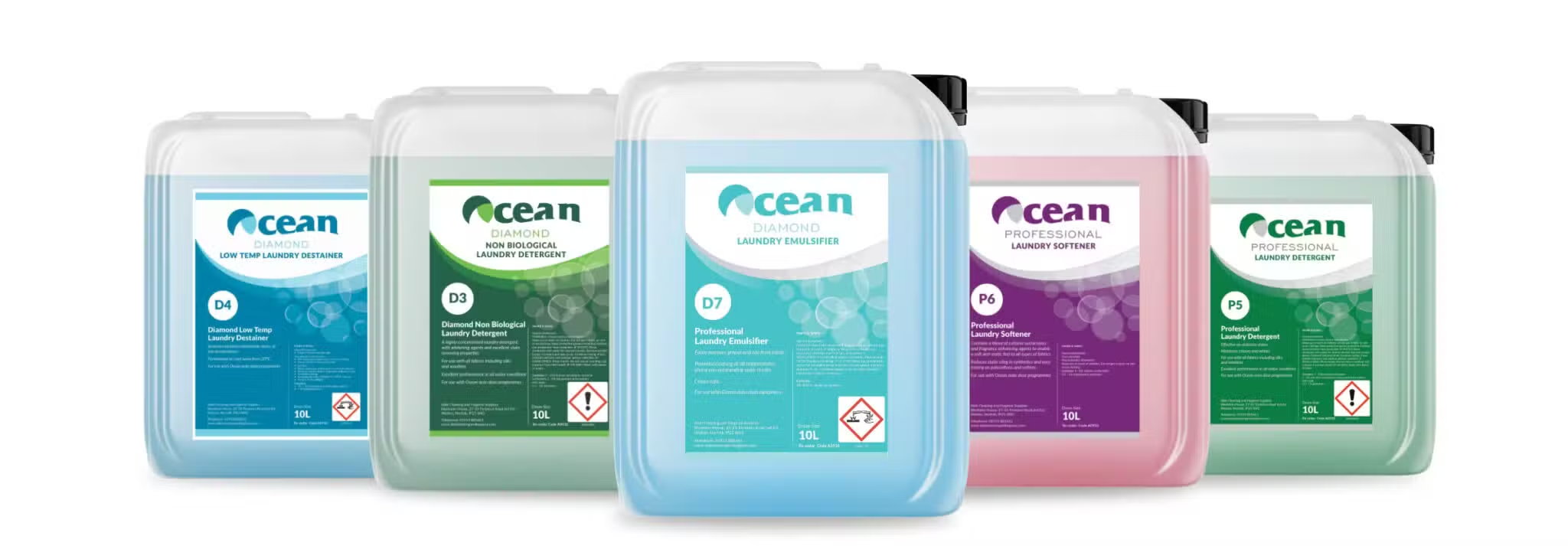
- Ocean P5 Professional Laundry Detergent — budget-friendly and reliable
- Ocean D1 Diamond Enzymatic Laundry Detergent — premium enzymatic cleaning power
- Ocean D3 Diamond Non-Bio Laundry Detergent — premium non-bio for sensitive skin and delicate items
Conditioners / Softeners
Conditioners improve softness, reduce static, and extend linen life. In a care home, this supports both resident comfort and dignity.
- Ocean P6 Professional Laundry Softener — economical, everyday softening
- Ocean D2 Diamond Encap Laundry Softener — premium softness and fabric care
Adding Boosters: Destainers and Emulsifiers
While detergent and softener form the standard system, some situations call for extra chemicals.
Destainers
Destainers are specialist additives designed to remove set-in stains such as tea, coffee, blood, or creams. They can also support disinfection when washing at lower temperatures, provided the process is correctly set up and validated.
- Ocean D4 Diamond Low-Temp Laundry Destainer — effective stain removal without unnecessary fibre damage
Emulsifiers
Emulsifiers target oils, creams, and fats — soils that detergents alone may struggle to break down. In care homes, this often comes from skincare products, continence creams, or kitchen oils.
- Ocean D7 Diamond Emulsifier — premium formula for oily and fatty soils
For a plain-English explainer, see What Is a Laundry Emulsifier?
Choosing Between Ocean Professional and Ocean Diamond
Able supplies two core laundry chemical ranges:
- Ocean Professional — cost-effective, dependable, and suitable for most daily care-home laundry
- Ocean Diamond — premium, concentrated, and ideal for high-soil or infection-sensitive settings
The best option depends on soil levels, linen volumes, resident needs, water conditions, and how often your team experiences rewashing. For some homes, Ocean Professional provides everything needed for reliable day-to-day performance. For others, Ocean Diamond may deliver better long-term value by reducing rewashes, improving stain removal, and extending textile life.
Want help choosing between Professional and Diamond?
Auto-Dosing Systems: Why Accuracy Matters
Even the best chemicals won’t perform properly if they are dosed incorrectly. Manual dosing risks:
- Overdosing, leading to wasted product and fabric damage
- Underdosing, increasing infection risk and rewash rates
- Inconsistent wash results across different staff members
- Poor visibility over actual chemical usage
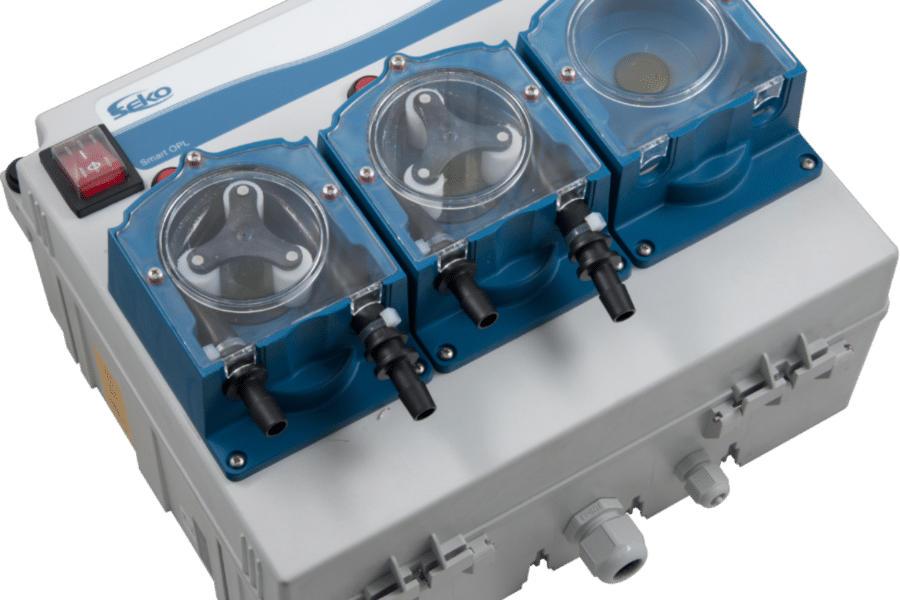
Auto-dosing systems deliver precise chemical amounts every wash. This reduces waste, improves consistency, supports COSHH controls, and helps care homes maintain a more auditable laundry process.
Learn more on our laundry chemicals and auto-dosing page.
Cost Considerations for Care Homes
With tight budgets, care homes should look beyond unit price and focus on cost per wash.
A cheaper chemical may cost more overall if it leads to higher rewash rates, damaged textiles, or inconsistent results. Likewise, a premium chemical may offer better value if it reduces labour time, protects linen, and improves first-time wash performance.
- Ocean Professional offers a lower upfront cost for standard daily loads
- Ocean Diamond costs more initially but can reduce rewashes and extend fabric life
See our guide on laundry cost per wash.
Best Practices for Using Laundry Chemicals
- Train all laundry staff in COSHH and PPE
- Store chemicals securely and label them clearly
- Service auto-dosing systems regularly
- Follow standardised care home laundry procedures
- Maintain logs of chemical usage, servicing, and process changes
- Review wash programmes when resident needs or soil types change
Common Pitfalls to Avoid
- Using domestic products in commercial machines
- Over- or under-dosing without an auto-dosing system
- Skipping sanitising cycles to save time
- Failing to address oily soils with an emulsifier
- Ignoring stain build-up without a destainer
- Choosing chemicals based only on drum price rather than total wash cost
These mistakes often lead to failed audits, damaged fabrics, poor infection-control confidence, and unnecessary costs.
Ready to Strengthen Your Laundry Compliance?
The right care home laundry chemicals should reduce infection risk, control costs, and give you confidence during inspections.
If you’d like an independent review of your chemical setup — including dosing accuracy, soil levels, product selection, and process alignment — our team can help.
Care Home Laundry Chemicals FAQs
What chemicals are used in care home laundry?
The standard setup is detergent and fabric conditioner. Many care homes also use destainers for stubborn stains and emulsifiers for oily or fatty soils such as creams, food oils, and body fluids.
Why are auto-dosing systems useful in care home laundry?
Auto-dosing systems deliver the correct amount of chemical for each wash. This reduces waste, improves consistency, supports COSHH controls, and helps reduce rewash rates.
What is the best laundry chemical for sensitive skin?
Non-bio detergents are usually preferred for sensitive skin because they do not contain enzymes. Care homes should still choose professional-grade non-bio products suitable for commercial use.
What is a laundry emulsifier used for in care homes?
A laundry emulsifier helps break down oily and fatty soils such as skincare creams, continence creams, kitchen oils, and body oils. This improves stain removal and reduces the need for rewashing.
How can care homes reduce laundry chemical costs?
Care homes can reduce costs by focusing on cost per wash rather than drum price, using auto-dosing, reducing rewashes, choosing the right detergent range, and maintaining equipment properly.