

Keeping laundry hygienic in care homes is more than a daily routine. It’s frontline infection control, a regulatory requirement, and a way to protect residents’ dignity. The right care home laundry chemicals ensure that clothing, bedding, and linens are both clean and safe for use. More importantly, your chemical system must stand up to inspection scrutiny.
CQC and HTM 01-04 guidance expect validated processes, correct dosing, and documented infection-control procedures. Choosing the right care home laundry chemicals is therefore not just about cleaning performance — it’s about audit readiness.
In this guide, we’ll cover:
- Why chemicals matter in care homes
- The standard set-up: detergent + conditioner
- The extra boosters: destainers and emulsifiers
- How to choose between Ocean Professional and Ocean Diamond
- The role of auto-dosing
- Cost-per-wash considerations
- Compliance, pitfalls, and FAQs
Why Care Home Laundry Chemicals Matter
Care homes process large volumes of laundry every day — uniforms, linens, towels, and residents’ personal items. These may be soiled with food, body fluids, creams, or bacteria. Without the right chemicals, you risk cross-contamination, outbreaks, and failed CQC audits.
The correct chemical system ensures:
- Reliable stain and soil removal
- Infection-control compliance (e.g. HTM 01-04)
- Longer linen life and resident comfort
- Lower rewash rates and cost control
👉 For more detail, see our guide on care home laundry compliance.
The Standard Laundry Set-Up: Detergent + Conditioner
Every care home laundry system starts with two essentials: detergent and fabric conditioner (softener).
Detergents
Detergent is the workhorse that lifts stains and removes soils. Care homes typically choose between:
- Bio detergents (contain enzymes) — best for protein and food stains such as blood, milk, or gravy
- Non-bio detergents (enzyme-free) — gentler on sensitive skin and suitable for residents’ clothing
Examples:
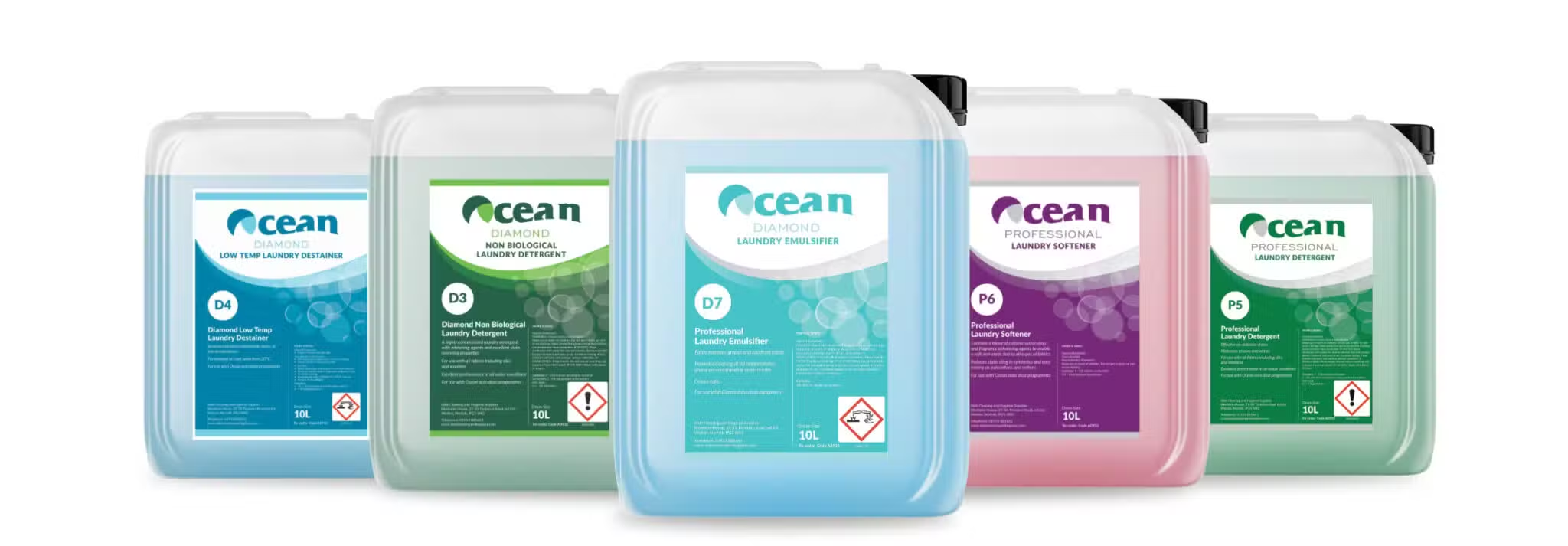
- Ocean P5 Professional Laundry Detergent — budget-friendly and reliable
- Ocean D1 Diamond Enzymatic Laundry Detergent — premium enzymatic cleaning power
- Ocean D3 Diamond Non-Bio Laundry Detergent — premium non-bio for sensitive skin and delicate items
Conditioners / Softeners
Conditioners improve softness, reduce static, and extend linen life. In a care home, this supports both resident comfort and dignity.
- Ocean P6 Professional Laundry Softener — economical, everyday softening
- Ocean D2 Diamond Encap Laundry Softener — premium softness and fabric care
Adding Boosters: Destainers and Emulsifiers
While detergent and softener form the standard system, some situations call for extra chemicals.
Destainers (for stubborn stains and low-temperature washing)
Destainers are specialist additives designed to remove set-in stains such as tea, coffee, blood, or creams. They also boost disinfection when washing at lower temperatures.
- Ocean D4 Diamond Low-Temp Laundry Destainer — highly effective without damaging fibres
Emulsifiers (for oily and fatty soils)
Emulsifiers target oils, creams, and fats — soils that detergents alone may struggle to break down. In care homes, this often comes from skincare products, continence creams, or kitchen oils.
- Ocean D7 Diamond Emulsifier — premium formula for oily and fatty soils
For a plain-English explainer, see: What is a laundry emulsifier?
Choosing Between Ocean Professional and Ocean Diamond
Able supplies two core ranges:
- Ocean Professional — cost-effective, dependable, and suitable for most daily care-home laundry
- Ocean Diamond — premium, concentrated, and ideal for high-soil or infection-sensitive settings
Unsure whether your current laundry chemicals would meet inspection standards?
A quick review of your dosing accuracy, chemical selection, and infection-control process can highlight gaps before they become problems.
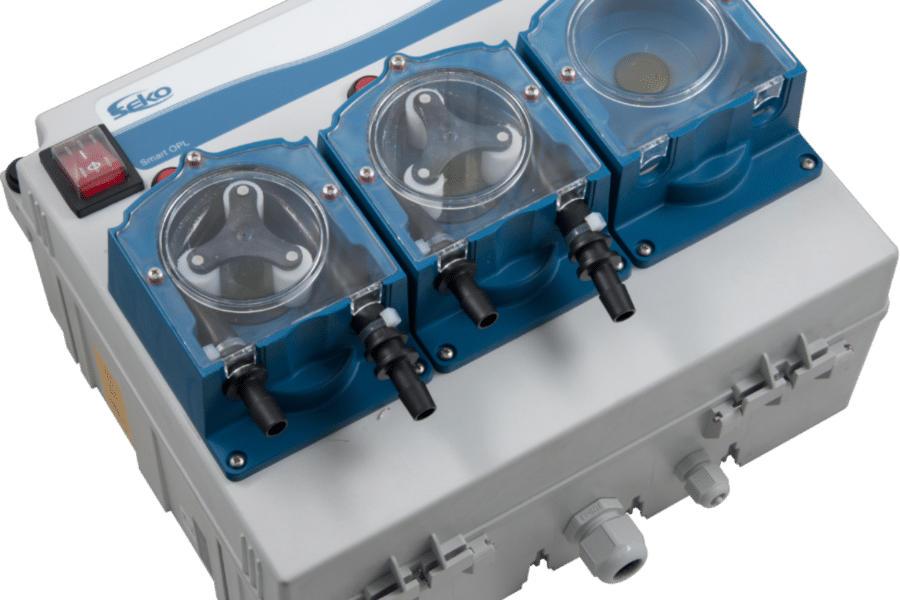
Auto-Dosing Systems: Why Accuracy Matters
Even the best chemicals won’t perform if dosed incorrectly. Manual dosing risks:
- Overdosing, leading to fabric damage and wasted product
- Underdosing, increasing infection risk and rewash rates
Auto-dosing systems deliver precise amounts every wash, reducing costs and supporting compliance.
👉 Learn more on our laundry chemicals and auto-dosing page.
Cost Considerations for Care Homes
With tight budgets, care homes should look beyond unit price and focus on cost per wash.
- Ocean Professional offers the lowest upfront cost for standard daily loads
- Ocean Diamond costs more initially but reduces rewashes and extends fabric life
See our guide on laundry cost per wash.
Best Practices for Using Laundry Chemicals
- Train all laundry staff in COSHH and PPE
- Store chemicals securely and label clearly
- Service auto-dosing systems regularly
- Follow standardised care home laundry procedures
- Maintain logs of chemical usage and servicing
Common Pitfalls to Avoid
- Using domestic products in commercial machines
- Over- or under-dosing without auto-dosing
- Skipping sanitising cycles to save time
- Failing to address oily soils with emulsifier
- Ignoring stain build-up without destainer
These mistakes often lead to failed audits, damaged fabrics, and unnecessary costs.
FAQs About Care Home Laundry Chemicals
Q: What laundry detergent do care homes use?
Most use professional bio/non-bio detergents, often from ranges like Ocean Professional or Ocean Diamond.
Q: What are the rules for laundry in care homes?
NHS HTM 01-04 requires segregation of soiled items, validated chemical processes, and staff training.
Q: What chemicals are used in laundry?
The standard set-up is detergent + softener, with optional destainer and emulsifier.
Q: What’s the best choice for sensitive skin?
Non-bio detergents such as Ocean D3 Diamond Non-Bio are the safest option.
Q: Are eco-friendly laundry chemicals available?
Yes — but in care homes they must still meet infection-control standards.
Ready to Strengthen Your Laundry Compliance?
The right care home laundry chemicals should reduce infection risk, control costs, and give you confidence during inspections.
If you’d like an independent review of your chemical setup — including dosing accuracy, soil levels, and HTM alignment — our team can help.
Keeping laundry hygienic in care homes is more than a daily routine. It’s frontline infection control, a regulatory requirement, and a way to protect residents’ dignity. The right care home laundry chemicals ensure that clothing, bedding, and linens are both clean and safe for use. More importantly, your chemical system must stand up to inspection scrutiny.
CQC and HTM 01-04 guidance expect validated processes, correct dosing, and documented infection-control procedures. Choosing the right care home laundry chemicals is therefore not just about cleaning performance — it’s about audit readiness.
In this guide, we’ll cover:
- Why chemicals matter in care homes
- The standard set-up: detergent + conditioner
- The extra boosters: destainers and emulsifiers
- How to choose between Ocean Professional and Ocean Diamond
- The role of auto-dosing
- Cost-per-wash considerations
- Compliance, pitfalls, and FAQs
Why Care Home Laundry Chemicals Matter
Care homes process large volumes of laundry every day — uniforms, linens, towels, and residents’ personal items. These may be soiled with food, body fluids, creams, or bacteria. Without the right chemicals, you risk cross-contamination, outbreaks, and failed CQC audits.
The correct chemical system ensures:
- Reliable stain and soil removal
- Infection-control compliance (e.g. HTM 01-04)
- Longer linen life and resident comfort
- Lower rewash rates and cost control
👉 For more detail, see our guide on care home laundry compliance.
The Standard Laundry Set-Up: Detergent + Conditioner
Every care home laundry system starts with two essentials: detergent and fabric conditioner (softener).
Detergents
Detergent is the workhorse that lifts stains and removes soils. Care homes typically choose between:
- Bio detergents (contain enzymes) — best for protein and food stains such as blood, milk, or gravy
- Non-bio detergents (enzyme-free) — gentler on sensitive skin and suitable for residents’ clothing
Examples:
- Ocean P5 Professional Laundry Detergent — budget-friendly and reliable
- Ocean D1 Diamond Enzymatic Laundry Detergent — premium enzymatic cleaning power
- Ocean D3 Diamond Non-Bio Laundry Detergent — premium non-bio for sensitive skin and delicate items
Conditioners / Softeners
Conditioners improve softness, reduce static, and extend linen life. In a care home, this supports both resident comfort and dignity.
- Ocean P6 Professional Laundry Softener — economical, everyday softening
- Ocean D2 Diamond Encap Laundry Softener — premium softness and fabric care
Adding Boosters: Destainers and Emulsifiers
While detergent and softener form the standard system, some situations call for extra chemicals.
Destainers (for stubborn stains and low-temperature washing)
Destainers are specialist additives designed to remove set-in stains such as tea, coffee, blood, or creams. They also boost disinfection when washing at lower temperatures.
- Ocean D4 Diamond Low-Temp Laundry Destainer — highly effective without damaging fibres
Emulsifiers (for oily and fatty soils)
Emulsifiers target oils, creams, and fats — soils that detergents alone may struggle to break down. In care homes, this often comes from skincare products, continence creams, or kitchen oils.
- Ocean D7 Diamond Emulsifier — premium formula for oily and fatty soils
For a plain-English explainer, see: What is a laundry emulsifier?
Choosing Between Ocean Professional and Ocean Diamond
Able supplies two core ranges:
- Ocean Professional — cost-effective, dependable, and suitable for most daily care-home laundry
- Ocean Diamond — premium, concentrated, and ideal for high-soil or infection-sensitive settings
Unsure whether your current laundry chemicals would meet inspection standards?
A quick review of your dosing accuracy, chemical selection, and infection-control process can highlight gaps before they become problems.
Auto-Dosing Systems: Why Accuracy Matters
Even the best chemicals won’t perform if dosed incorrectly. Manual dosing risks:
- Overdosing, leading to fabric damage and wasted product
- Underdosing, increasing infection risk and rewash rates
Auto-dosing systems deliver precise amounts every wash, reducing costs and supporting compliance.
👉 Learn more on our laundry chemicals and auto-dosing page.
Cost Considerations for Care Homes
With tight budgets, care homes should look beyond unit price and focus on cost per wash.
- Ocean Professional offers the lowest upfront cost for standard daily loads
- Ocean Diamond costs more initially but reduces rewashes and extends fabric life
See our guide on laundry cost per wash.
Best Practices for Using Laundry Chemicals
- Train all laundry staff in COSHH and PPE
- Store chemicals securely and label clearly
- Service auto-dosing systems regularly
- Follow standardised care home laundry procedures
- Maintain logs of chemical usage and servicing
Common Pitfalls to Avoid
- Using domestic products in commercial machines
- Over- or under-dosing without auto-dosing
- Skipping sanitising cycles to save time
- Failing to address oily soils with emulsifier
- Ignoring stain build-up without destainer
These mistakes often lead to failed audits, damaged fabrics, and unnecessary costs.
FAQs About Care Home Laundry Chemicals
Q: What laundry detergent do care homes use?
Most use professional bio/non-bio detergents, often from ranges like Ocean Professional or Ocean Diamond.
Q: What are the rules for laundry in care homes?
NHS HTM 01-04 requires segregation of soiled items, validated chemical processes, and staff training.
Q: What chemicals are used in laundry?
The standard set-up is detergent + softener, with optional destainer and emulsifier.
Q: What’s the best choice for sensitive skin?
Non-bio detergents such as Ocean D3 Diamond Non-Bio are the safest option.
Q: Are eco-friendly laundry chemicals available?
Yes — but in care homes they must still meet infection-control standards.
Ready to Strengthen Your Laundry Compliance?
The right care home laundry chemicals should reduce infection risk, control costs, and give you confidence during inspections.
If you’d like an independent review of your chemical setup — including dosing accuracy, soil levels, and HTM alignment — our team can help.