


How to Separate Laundry in Care Homes: Colour Coding and Risk Categories Explained
Proper laundry handling in care homes is more than just good housekeeping—it’s a core part of infection control, resident dignity, and regulatory compliance. When laundry is mishandled, cross-contamination can quickly become a serious risk for both residents and staff.
In this article, we explain how to separate laundry in care homes correctly using colour-coded systems, risk categories, and best practices commonly recommended across healthcare and care environments.
If you’re unsure whether your current laundry separation process follows best practice, we can review your setup and recommend safer, more compliant solutions for your care home.
Why Laundry Separation Matters in Care Homes
Care homes process large volumes of laundry every day, including bedding, towels, personal clothing, staff uniforms and occasionally heavily soiled items. If these items are washed together without proper separation, pathogens can spread between loads.
CQC inspections and infection-control audits frequently review laundry procedures. Establishing a safe and consistent separation process helps demonstrate compliance and ensures staff follow clear routines.
Step 1: Use Colour-Coded Bags for Sorting
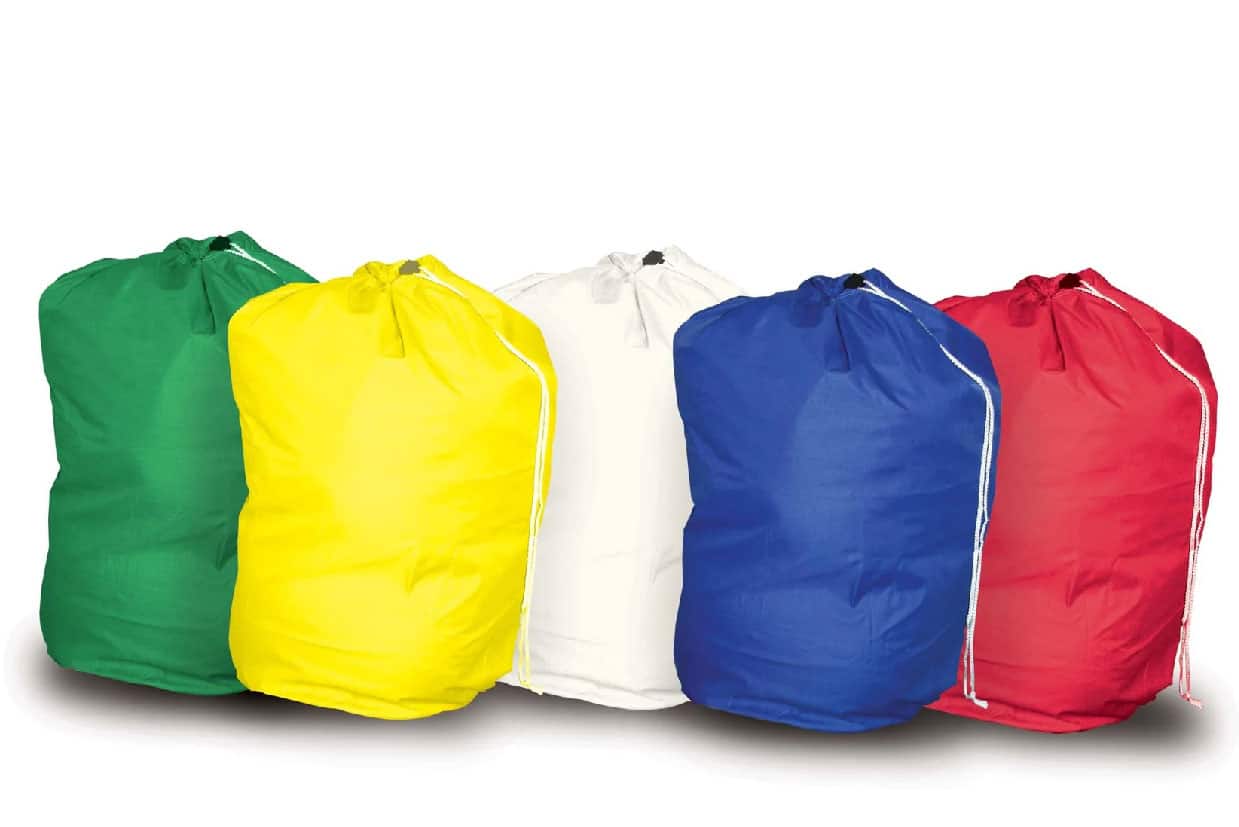
Colour-coded laundry bags are one of the simplest and most effective ways to separate laundry by risk category before washing.
Typical systems used across healthcare and care homes include:
| Colour | Use |
|---|---|
| Red (water-soluble) | Infectious or heavily soiled laundry |
| White / Clear | Personal resident clothing |
| Blue | Soiled but non-infectious items such as bedding or towels |
| Green | Kitchen laundry such as aprons or tea towels |
Best practice recommends placing red water-soluble bags inside white outer bags and transferring them directly into the washing machine without opening them. This reduces airborne contamination risks and protects staff handling laundry.
In most care and healthcare settings, infectious or heavily soiled linen is placed in a red water-soluble bag, usually inside a white outer bag for safe transport and handling.
If your care home isn’t currently using a structured colour-coded system, our team can advise on the right bags, containers and equipment.
Step 2: Keep Laundry Bins Clearly Labelled and Covered
Each laundry collection point should:
- Use colour-coded signage matching the bags
- Provide lidded, easy-clean containers
- Keep dirty laundry separate from clean storage areas
This clarity helps staff follow procedures consistently, particularly agency staff or new employees.
Step 3: Train Staff to Identify Risk Categories
Items should be sorted according to risk category, not just appearance, because visually similar loads may require very different handling and wash procedures.
- Infectious laundry includes items contaminated with blood or bodily fluids
- Heavily soiled items may still require higher-temperature wash cycles
- Personal clothing should usually be washed separately to reduce cross-contamination
Wall charts or visual guides in the laundry room can help reinforce the correct sorting procedures.
If you’re unsure whether staff are following consistent sorting practices, we can review your laundry workflow and recommend improvements.
Step 4: Pre-Treat and Handle Soiled Laundry Safely
Handling procedures before washing also play a key role in infection control.
- Remove solid waste before bagging
- Avoid shaking contaminated bedding
- Place infectious items directly into water-soluble bags
These precautions reduce contamination risks and protect staff handling laundry.
Step 5: Use Correct Dosing and Disinfection
Once separated correctly, laundry must be washed using the correct chemical dosing and temperatures. Many care homes now use auto-dosing systems to maintain consistent disinfection levels and reduce human error.
If your home is reviewing its current setup, explore our laundry chemicals and auto-dosing systems.
Step 6: Use the Right Machines for Each Load Type
Commercial washing machines used in care homes must meet infection-control requirements.
- Machines should support thermal disinfection cycles
- Wash programs should reach 65–71°C
- Equipment should be cleaned and maintained regularly
- Machine setup and wash processes should align with care home laundry regulations and infection-control guidance
If you’re reviewing your laundry capacity or planning upgrades, visit our laundry equipment page or contact our team.
Additional Resource
For further guidance on infection-control laundry handling, the NHS Health Technical Memorandum 01-04 outlines recommended linen decontamination procedures for healthcare environments.
Final Thoughts
Knowing how to separate laundry in care homes is a crucial part of infection prevention. With the right colour-coded systems, clear staff training, and suitable equipment, care homes can minimise contamination risks, protect staff, and maintain regulatory compliance.
If you’d like reassurance that your laundry procedures meet best-practice standards, we can review your setup and recommend improvements.
FAQs: Laundry Separation and Colour Coding in Care Homes
What is the standard colour-coding system for care home laundry?
Most care homes use the NHS-aligned system:
Red (water-soluble): Infectious or soiled laundry (blood, faecal matter, bodily fluids)
White or Clear: Resident personal clothing
Blue: Non-infectious soiled laundry (towels, bedding)
Green: Kitchen laundry such as aprons and tea towels
How should infectious laundry be handled?
Infectious laundry should go straight into red water-soluble bags, placed inside white outer bags, and transferred directly to the washing machine unopened. This minimises staff exposure and airborne contamination.
What are laundry risk categories in care homes?
Laundry is usually divided into three risk levels:
High-risk: Infectious or isolation laundry
Medium-risk: Heavily soiled but non-infectious items
Low-risk: Personal or lightly soiled laundry
Understanding these helps staff choose correct washing temperatures and disinfection cycles.
How can staff stay consistent with laundry colour-coding?
Use clear signage, wall charts, and colour-coded bins to match bag colours. Regular staff training and refreshers help everyone follow the same infection-control process.
Do laundry audits check for correct colour-coding?
Yes. CQC and local authorities often review how laundry is separated, stored, and labelled during audits. Following a clear colour-coded system supports compliance and shows best practice.
What temperature should care home laundry be washed at?
Thermal disinfection requires at least 71°C for three minutes or 65°C for ten minutes. If lower temperatures are used, detergents must meet EN 1276 or EN 1650 standards for chemical disinfection.
How can Able help care homes with laundry separation?
Able provides infection-control detergents, auto-dosing systems, and commercial laundry equipment built for care environments. The team also offers consultations to help homes meet HTM 01-04 and CQC requirements.