

Running a care home in Cambridgeshire brings a host of daily challenges. However, making sure your lifting equipment stays safe and compliant doesn’t need to be one of them. That’s exactly where we come in. With reliable, straightforward LOLER testing in Cambridgeshire, you’ll meet your legal obligations without unnecessary stress or disruption.
LOLER Testing: What’s It All About?
LOLER stands for the Lifting Operations and Lifting Equipment Regulations 1998. These regulations ensure all lifting equipment—like hoists, slings, and electric profiling beds—is safe to use. If it lifts or transfers a person, it almost certainly falls under LOLER requirements.
In Cambridgeshire care homes, staying on top of LOLER inspections is about more than compliance. It protects residents, supports staff safety, and helps maintain inspection readiness throughout the year.
Need help understanding your LOLER responsibilities?
How Often Should LOLER Testing Be Done?
Typically, lifting equipment used with people must undergo inspection every six months. Equipment used purely for general lifting may only require annual testing, depending on how it’s used and the environment it operates within.
Importantly, care homes should not rely on assumptions. Different equipment categories carry different inspection expectations, so maintaining clear schedules and servicing records is essential.
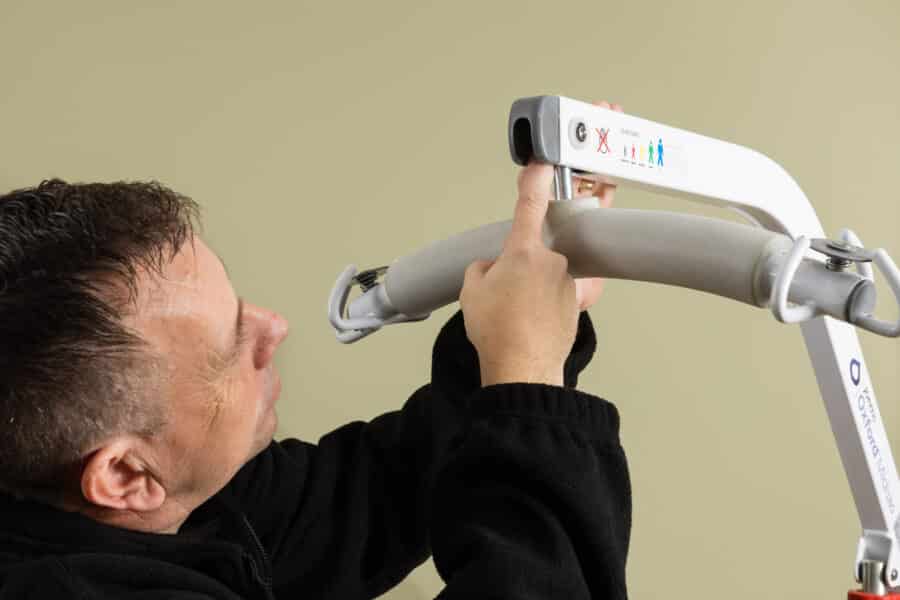
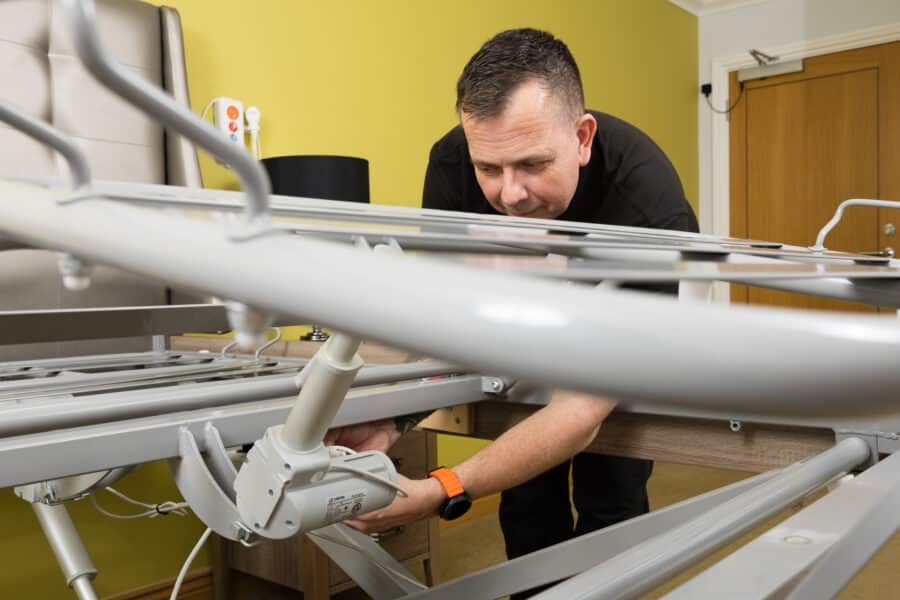
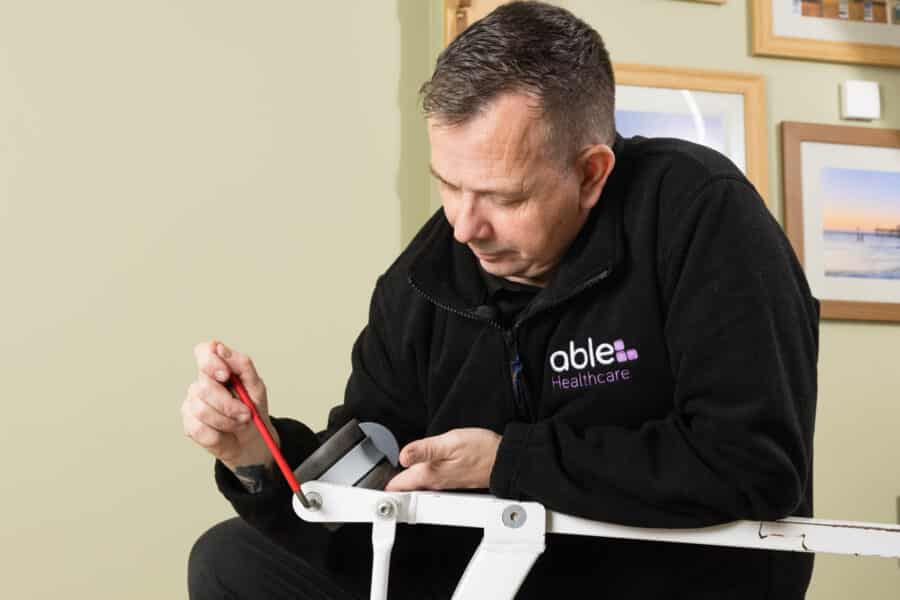
An Able engineer inspecting a mobile hoist during LOLER testing.
Is LOLER 6 Months or 12 Months?
Quick rule of thumb:
- 6 months – equipment used to lift people
- 12 months – general lifting equipment not used with people
Still unsure where your equipment fits? That’s exactly where professional guidance helps avoid compliance gaps.
Who Can Carry Out a LOLER Test?
A quick visual check isn’t enough. LOLER inspections must be completed by a competent person with the correct training, experience, and independence to assess lifting equipment properly.
At Able Healthcare, our engineers work specifically within care environments. Consequently, they understand both the technical requirements and the practical realities of operating within busy care homes.
More importantly, we communicate clearly, minimise disruption, and provide practical recommendations rather than overwhelming teams with technical jargon.
Want help checking whether your current testing process is compliant?
What Happens During a LOLER Inspection?
Here’s what to expect when we visit:
- inspection of lifting equipment for wear, faults, or damaged parts
- checks on hoists, slings, profiling beds, and transfer equipment
- identification of issues before they become major failures
- full LOLER certification for your compliance records
Where appropriate, our inspections also include full safe working load testing to confirm equipment performs correctly under realistic operating conditions.
What Makes Able Healthcare Different?
Here’s where we go beyond standard compliance checks:
- Full working load tests: Our inspections include thorough load testing up to 180kg where required.
- Fast repair support: If faults are identified, we help resolve them quickly and safely.
- Clear compliance records: Inspection reports, due dates, and servicing history remain organised and accessible.
- Care-home experience: Our engineers work respectfully within sensitive environments with minimal disruption.
- Practical support: We focus on helping homes stay safe and inspection-ready rather than simply ticking boxes.
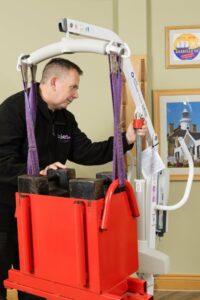
An Able engineer completes a full safe working load test on a patient hoist.
What Equipment Do We Check?
In Cambridgeshire care homes, we commonly inspect:
- mobile and ceiling-track hoists
- patient slings and transfer aids
- electric profiling beds
- bath lifts and stand aids
- shower chairs and specialist transfer equipment
If you’re unsure whether equipment falls under LOLER requirements, it’s always safer to check than assume.
Many homes also strengthen compliance by linking LOLER inspections with wider servicing and maintenance systems. Structured oversight supports safer operations and improves inspection confidence across the home.
Interested in simplifying your LOLER record keeping?
Ready to Get Started?
LOLER testing shouldn’t become another operational headache. With structured inspections, organised records, and experienced engineers, compliance becomes far easier to manage.
Book your LOLER testing in Cambridgeshire with Able Healthcare today and keep your care home safe, compliant, and inspection-ready.
Ready to arrange your next LOLER inspection?
LOLER Testing in Cambridgeshire FAQ’s
2. How often should LOLER inspections be carried out?
Equipment used to lift people must be inspected every six months. Equipment used for general lifting (not people) usually needs testing every 12 months.
3. Who can perform a LOLER test?
A LOLER inspection must be carried out by a “competent person” with the right training, experience, and independence. At Able Healthcare, our qualified engineers perform all tests to full regulatory standards.
4. What happens during a LOLER test?
Your inspector will check all lifting equipment for wear, damage, or faults. They’ll test hoists, slings, beds, and other lifting aids, then issue a detailed LOLER certificate once everything passes.
5. What equipment requires LOLER testing in care homes?
Typical items include mobile hoists, ceiling track hoists, slings, bath lifts, stand aids, shower chairs, and electric profiling beds.
6. How much does LOLER testing in Cambridgeshire cost?
Pricing depends on the number and type of equipment. For an accurate quote, you can book a free consultation with our team.
7. What makes Able Healthcare’s LOLER service different?
Our engineers provide full working load tests, quick repairs when needed, and maintain your compliance records—making inspections simpler and less stressful.